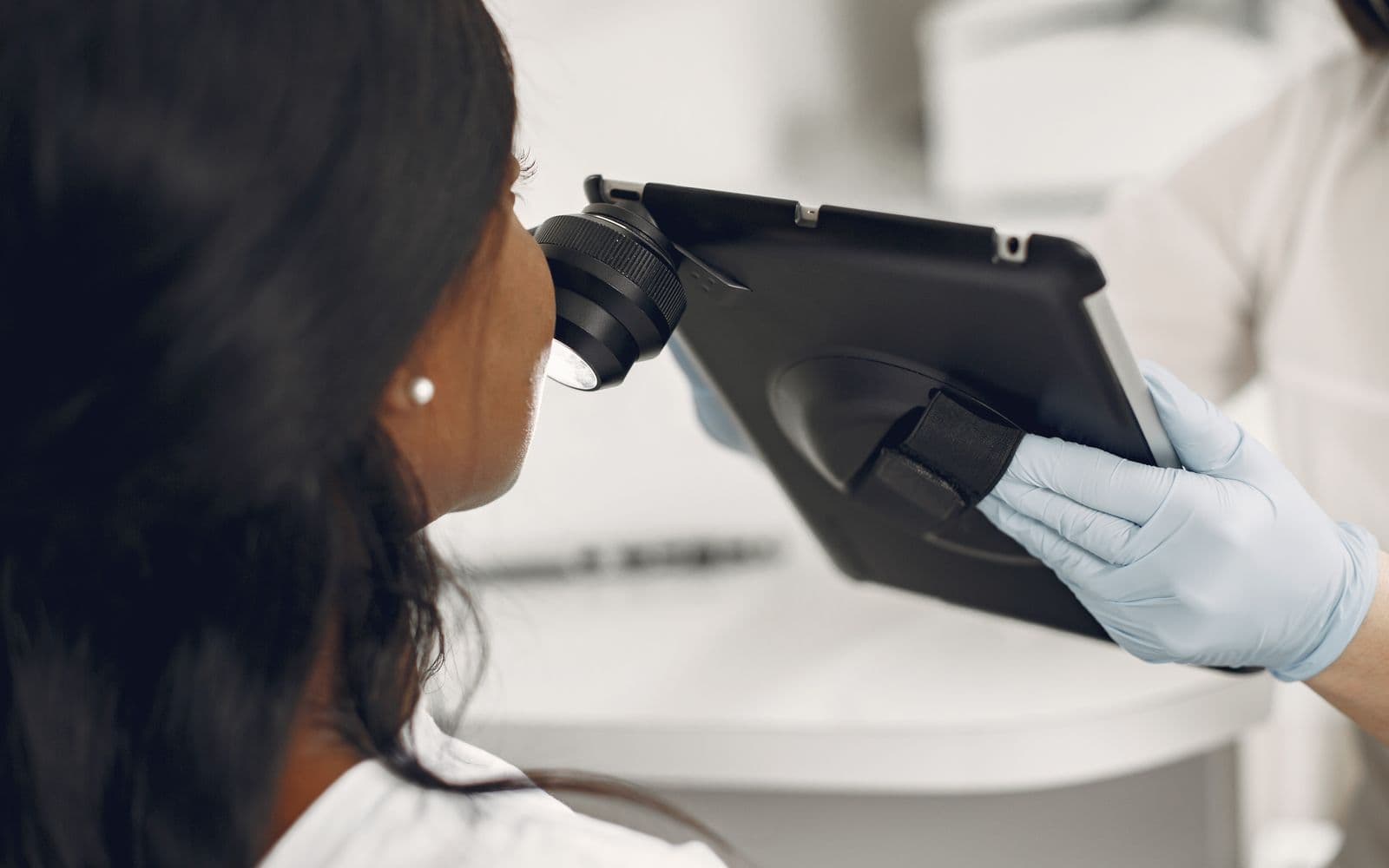
What your skin is trying to tell you
This first guide is not about any single disease. It is about learning to read the surface: the quiet indicators most people miss, dismiss, or attribute to aging and weather, and what they can mean. The conditions themselves — psoriasis, eczema, vitiligo and the rest — get their own deep dives later. Think of this as learning the alphabet before the words.
A caution before we start, because it runs through everything below. A skin sign is a prompt to look closer, not a diagnosis. Most dry skin is just dry skin. Most itches are nothing. The skill worth building is not self-diagnosis — it is knowing which patterns are worth a conversation with a clinician, and which are genuinely urgent. To keep that honest, every claim here is tagged by how strong the evidence behind it actually is.
This is an alphabet, not a diagnosis manual. A skin sign earns a closer look — sometimes a blood test — not a conclusion. The win is knowing which patterns are worth a clinician's time, and which combinations (in the red-flag box below) mean don't wait.
Why the surface reports on the inside
The skin is not isolated from the rest of the body. It is fed by the same blood, regulated by the same hormones, and patrolled by the same immune system as every other organ. That shared supply is exactly why it makes such a good readout. A pigment that should not be there, a texture that has changed, a colour that has shifted — each is a downstream consequence of something happening in a system you cannot see.
Consider the clearest example. When the body becomes resistant to insulin — the early machinery of type 2 diabetes — insulin levels in the blood climb to compensate. That excess insulin doesn't stay in the bloodstream quietly; it binds to growth-factor receptors on skin cells and tells them to multiply.[1] The visible result is acanthosis nigricans: velvety, darkened, slightly thickened skin in the folds of the neck, the armpits, or the groin. Established It looks like dirt that won't wash off. It is, in fact, a visible clue that can warrant screening for insulin resistance — recognised formally by the American Diabetes Association as an indicator decades ago,[1] and most people who develop it have also become resistant to insulin.[2]
That is the template for everything that follows. The skin changes because the internal environment changed. Learn the link, and the surface becomes legible.
Most dry skin is just dry skin. The skill is not self-diagnosis — it's knowing which patterns are worth a closer look.
Colour: when pigment tells a story
Colour change is the signal people are quickest to attribute to sun, age, or cosmetics — and sometimes that's right. But pigment is tied to hormones, bile, iron and oxygen, and a genuine shift can point inward.
Jaundice
A yellow cast to the skin or the whites of the eyes reflects a build-up of bilirubin, a pigment the liver normally clears. It is one of the oldest recognised signs of liver and bile-duct disease. When bile flow is obstructed — cholestasis — the classic cluster is jaundice, dark urine, pale stools and generalised itch, the itch arising because bile products accumulate in the skin.[8] Notably, that cholestatic itch is often misdiagnosed as a primary skin problem, especially in people who itch before any yellowing appears.[12]
Points to: liver disease, bile-duct obstruction, certain pancreatic conditions Established
Diffuse hyperpigmentation
When the adrenal glands fail to produce enough cortisol — Addison's disease — the pituitary ramps up a signalling hormone that also drives pigment production. The result is generalised darkening, most striking in skin creases, scars and sun-exposed areas.[9] It is subtle and slow, which is exactly why it is missed.
Points to: adrenal insufficiency (Addison's disease); occasionally hyperthyroidism Established
Xanthelasma
These flat or slightly raised yellow patches near the eyelids are cholesterol deposits in the skin. Around half of people who have them carry a lipid abnormality, and even those with normal cholesterol appear to face a higher long-term risk of heart disease and atherosclerosis.[10] A cosmetic nuisance that is sometimes a cardiovascular hint.
Points to: high cholesterol, cardiovascular risk; sometimes thyroid disease Established
Not every colour change is ominous. A yellow-orange tint to the palms and soles, for instance, can simply be carotenemia from eating a great deal of carrots, squash or supplements — harmless, and a useful reminder that context matters before alarm.
Texture: what the surface feel reveals
Texture is a quieter signal than colour, which is why thyroid disease so often hides in it. People notice when skin looks different; they rarely flag when it simply feels different.
The hypothyroid pattern
An underactive thyroid slows the turnover of skin and the activity of the glands that keep it moist. In one clinical series, dry, coarse skin was the single most common cutaneous finding in hypothyroid patients, present in well over half, often alongside diffuse hair thinning.[7] Because it creeps in gradually and overlaps with ordinary winter dryness, it is one of the most under-recognised signals on this list.
Points to: hypothyroidism Established
Multiple skin tags
Common and usually harmless — but their prevalence rises with age, obesity and metabolic syndrome, and epidemiological studies link them with type 2 diabetes, dyslipidaemia, insulin resistance and PCOS.[13] They often travel in the same company as the velvety darkening of acanthosis nigricans. One or two mean little; multiple or recurrent lesions are recognised as a prompt to evaluate for underlying metabolic problems.[13]
Points to: insulin resistance, metabolic syndrome (in context) Suggestive
Itch: the signal with no rash
This is the one that deserves the most attention, because it is the most counterintuitive. We assume itch means something on the skin — a bite, a rash, a dryness. But a persistent, generalised itch with nothing visible to explain it is a recognised flag for internal disease.
Among patients referred to dermatologists for generalised itch with no primary rash, somewhere between roughly one in seven and one in four turn out to have an underlying systemic cause.[5] The usual suspects are well-mapped: chronic kidney disease, cholestatic liver disease, thyroid disorders, iron-metabolism problems and certain blood cancers.[4] Established
Two patterns are worth knowing by name. An intense, prickling itch triggered specifically by contact with water — classically after a warm shower — is called aquagenic pruritus, and it can precede the blood disorder polycythaemia vera by years.[3] It can also occur entirely on its own, with no underlying disease, which is worth remembering before alarm. And persistent generalised itch is a long-recognised feature of Hodgkin lymphoma; chronic itch has been reported in around 30% of cases and can be one of the earliest signs, sometimes preceding the diagnosis.[11] Established
A note of proportion, though: itch is easy to over-read as a cancer sign. The same clinical reviews that document these links also caution that, in the absence of other warning signs, generalised itch only rarely turns out to be malignancy.[5] The point is not to fear the itch — it is to get it checked when it persists or travels with the symptoms below.
- It is generalised and there is no rash to explain it.
- It has lasted more than two weeks and doesn't respond to moisturiser or antihistamines.
- It is reliably triggered by water regardless of temperature.
Seek prompt or urgent care instead if itch comes with yellowing of the skin or eyes, rapid swelling, fever, drenching night sweats, or unexplained weight loss — or if you are becoming rapidly more unwell. Those combinations move the situation from “book an appointment” to “don't wait.”
None of these guarantees anything serious — most chronic itch still traces back to dry skin, medication or nerve irritation. But the combination of an unexplained itch plus any of the systemic symptoms above is the textbook prompt to get bloodwork rather than another bottle of lotion.
Healing: the wound that won't close
How fast a small cut heals is a quiet stress test of your circulation, your blood sugar and your immune function. Wounds that are slow to close, or that keep recurring in the same place, are a recognised marker of poorly controlled diabetes and of impaired circulation — the skin running short on the oxygen and repair signals it needs.[9] Established The lower legs and feet are where this shows first, which is why foot care is such a fixture of diabetes management.
The fingernails: ten small windows
Nails are modified skin, and because they grow slowly and record what happens at their root, they keep a kind of diary. Clinicians have long read them for clues to systemic disease — not as proof, but as prompts.[6]
Koilonychia — “spoon nails”
Thin, soft nails that scoop upward at the edges are classically linked to iron-deficiency anaemia, and sometimes to the iron-overload disorder hemochromatosis or to hypothyroidism.[6]
Points to: iron deficiency, hemochromatosis, hypothyroidism Established
Clubbing
When fingertips broaden and the nails wrap around them over months or years, the most-cited associations are chronic lung disease and certain heart conditions, but it also appears in inflammatory bowel disease and liver cirrhosis.[6] Clubbing with no obvious cause is a recognised prompt to look for an occult problem in the chest.
Points to: lung disease, heart disease, inflammatory bowel disease, cirrhosis Established
Terry's nails
When nearly the whole nail turns opaque white, leaving only a narrow pink or brown strip at the end, the change reflects altered blood flow in the nail bed. It was first described in liver cirrhosis and has since been linked to congestive heart failure and diabetes — though it can also simply accompany aging.[6]
Points to: liver cirrhosis, heart failure, diabetes (or aging) Suggestive
Beau's lines
A transverse groove is a growth pause — the nail matrix briefly stopped working during a period of severe illness, high fever, major stress or chemotherapy. Because nails grow at a known rate, the position of the line roughly dates the event that caused it.[6]
Points to: a past episode of severe systemic stress or illness Established
A single odd nail usually means a single odd event — a knock, an infection, a tight pair of shoes. The signal strengthens when a change shows up across many nails at once, because that points to something systemic rather than local.
The thread that runs through the whole series
Step back from the individual signs and a pattern emerges. The thyroid writes itself onto skin texture. The liver writes itself into colour and itch. Blood sugar writes itself into the skin folds and the speed of healing. The immune system, as later guides will show, writes itself into rashes, pigment loss and inflammation. The skin is not a separate territory from the body's health — it is one of its most public registers.
That idea — that the surface and the interior are continuous — is the spine of this series. The next guides take single conditions and follow them inward: not just what they look like, but what they reveal, how they connect to the gut, the immune system and metabolism, and what the full range of approaches to them looks like, from the strongly evidence-based to the experimental and the community-driven.
One reason these signals get spotted at all is that people increasingly crowd-source them. Online forums and condition-specific communities are full of people noticing a nail ridge or a patch of darkened skin and asking whether it means anything. That instinct — to look closer and ask — is healthy.
What those spaces do well is normalise paying attention and reduce the isolation of a strange symptom. What they cannot do is examine you, run bloodwork, or weigh a sign against your full history. Photos and anecdotes can help someone decide to seek care, but they can just as easily amplify false reassurance or false alarm. Treat community knowledge as exactly that: a valuable map of lived experience and a prompt to investigate, never a replacement for a clinician who can actually test the hypothesis.
The skin is not a separate territory from the body's health — it is one of its most public registers.
— the spine of the whole series
This guide is for education, not diagnosis. Skin signs are starting points for a conversation with a qualified healthcare professional — they are not enough, on their own, to confirm or rule out any condition. If you notice a persistent change in your skin, nails or sensation, especially alongside symptoms like unexplained weight loss, fatigue, night sweats or yellowing, see a doctor rather than relying on anything you read here. Nothing in this article replaces personalised medical care.
Next in the series — why digestion shows up on your face, and the thread that ties internal health to the surface:
The series · No. 2The Gut–Skin Connection→
References
Sources accessed June 11, 2026. Associations described reflect published clinical literature; individual cases vary and require professional evaluation.
- American Diabetes Association / clinical reviews on acanthosis nigricans as a marker of insulin resistance. StatPearls, NCBI Bookshelf. ncbi.nlm.nih.gov/books/NBK431057
- Mayo Clinic. Acanthosis nigricans — symptoms & causes (most people with acanthosis nigricans have become insulin resistant). mayoclinic.org
- Primary Care Dermatology Society. Pruritus (itch) without a rash — aquagenic pruritus and polycythaemia vera. pcds.org.uk
- Practical guide for the diagnosis and treatment of localized and generalized cutaneous pruritus. PMC, NIH. PMC11807371
- Reamy BV, et al. A diagnostic approach to pruritus. American Family Physician (14–24% of dermatology-referred generalized pruritus has a systemic cause; cautions against overemphasis as a cancer sign). aafp.org
- Fawcett RS, et al. Nail abnormalities: clues to systemic disease. American Family Physician. aafp.org
- Thyroid and skin. Indian Journal of Dermatology (dry, coarse skin as the most common cutaneous finding in hypothyroidism). journals.lww.com/ijd
- Merck Manual, Consumer Version. Cholestasis (jaundice, dark urine, pale stools and generalized itch as characteristic symptoms). merckmanuals.com
- Dermatologic manifestations of endocrine disorders. PMC, NIH (Addison's disease hyperpigmentation; diabetic skin changes and impaired healing). PMC5682371
- Cleveland Clinic. Xanthelasma — causes and cardiovascular associations (about half of people with xanthelasma do not have high cholesterol). my.clevelandclinic.org
- Arenas Villafranca JJ, et al. Paraneoplastic pruritus presenting with Hodgkin's lymphoma: a case report. Journal of Medical Case Reports, 2014 (reported pruritus prevalence of 30% in Hodgkin's lymphoma). PMC4170200
- Cholestatic jaundice. StatPearls, NCBI Bookshelf (cholestatic pruritus is often misdiagnosed as a primary dermatological condition, particularly without jaundice). ncbi.nlm.nih.gov/books/NBK482279
- Pandey A, Saleh HM. Skin tag (acrochordon). StatPearls, NCBI Bookshelf (prevalence rises with age, obesity and metabolic syndrome; linked with type 2 diabetes, dyslipidemia, insulin resistance and PCOS). ncbi.nlm.nih.gov/books/NBK547724

Comments