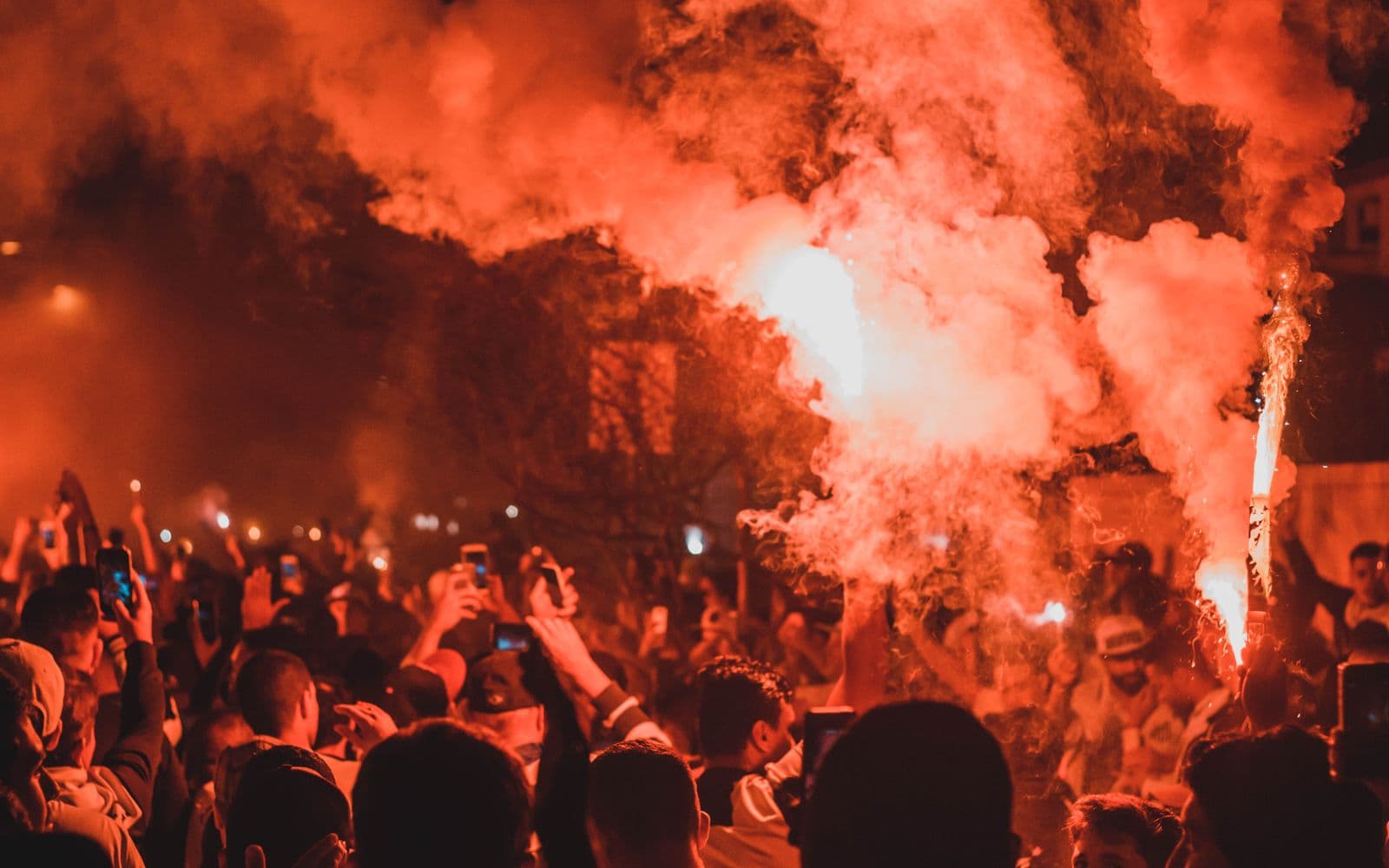
The old Bear died — or seemed to. And from its opened ribs, slick and steaming, rose a new Bear: red, sleepless, with iron eyes.
Cold Open
On the seventh of January, 1919, a young man named Alfred Schuck stood at the furthest edge of the American world.
He was a private in the 339th Infantry Regiment, near a village called Ust Padenga, in the subarctic wilderness of northern Russia, some four hundred and fifty miles from Moscow — the most advanced position any American soldier had ever held on Russian soil[1]. It was deep winter, the temperature far below zero. Across a frozen plain stood the onion domes of a Russian Orthodox church, dark against the white. In parishes like this one all across the north, priests loyal to the old order and soldiers of the new revolutionary government were killing one another in the villages[1].
When Alfred Schuck had trained at Camp Custer in Michigan the previous year, he believed he was going to France, to fight Germans in the trenches of the Great War[1]. Instead he found himself here, in a white silence at the top of the world, staring across the snow at an enemy he had never expected and could not explain. In the forests all around him were not Germans. They were Russians. Communists. The Bolsheviks[2].
And the war he thought he had come to fight was already over. The Armistice had been signed in France two months earlier, on the eleventh of November. The Great War was finished. And yet here, in the frozen dark, American boys were still killing and dying — fighting a war almost no one back home even knew existed[2][3].
Sit with the strangeness of that image, because it is the entire hinge of this story. For more than a century — the first diplomatic handshake, the sale of Alaska in 1867, the Russian fleets that sailed into New York harbor in 1863 while Americans wept and cried God bless the Russians — one thing had held true: the Eagle and the Bear had never, not once, fired a shot at each other. They had been distant, then friendly, then warm. They had been, in their strange conditional way, friends.
And now a farm boy in an American uniform was aiming a rifle at a Russian across a frozen field.
Something had broken. Something enormous. In the space of a single year, the old Russia the Eagle had known for a century — the Russia of tsars and Orthodox gold and imperial diplomacy — had simply ceased to exist, and in its place had risen something the Eagle had never seen and would come to fear above all things on earth. Russia had changed its name in fire. And this is the story of how the oldest friend became the newest nightmare.
The Empire That Ran Out of Bread
The old Russia did not fall to an invader. It fell because it ran out of bread.
By 1917, the Russian Empire had been at war for nearly three years, and the war was destroying it from the inside. Russia had entered the Great War in 1914 alongside Britain and France, and on the surface the Eagle and the Bear were now, for the first time, formal partners in a great cause. But the war was a catastrophe for Russia on a scale that is hard to comprehend — millions of soldiers dead, armies shattered by German firepower, the economy collapsing, the railways failing, and in the cities, the bread simply running out[4].
At the center of the collapse sat Tsar Nicholas II, the last of the Romanovs — a well-meaning, stubborn, tragically limited man who had made the fatal decision in 1915 to take personal command of the failing army, which meant that every defeat, every dead son, every empty bread line now belonged to him personally. His court was a scandal; his throne was rotting; and the three-hundred-year dynasty that had carried Russia from Muscovy to empire was about to end — not with a war lost to a foreign power, but with a queue of hungry women in the streets of the capital[4].
In March 1917 — the days the old Russian calendar still called February — the city then named Petrograd exploded. What began as bread riots and strikes swelled, within days, into a revolution. Soldiers ordered to fire on the crowds mutinied and joined them instead. The machinery of the autocracy seized and died. And on the fifteenth of March, Nicholas II abdicated the throne. Just like that, the Russian Empire — the empire of Peter and Catherine, the empire that had exchanged its first diplomatic ministers with the young United States in 1809 and sold it Alaska in 1867 — was gone[4][5]. A Provisional Government of liberals and moderates took its place, promising a new, democratic Russia.
And across the ocean, the Eagle was overjoyed.
Because for America in 1917, the fall of the Tsar was not a tragedy. It was a liberation, and a convenient one. The United States was on the verge of entering the Great War itself, and President Wilson wanted to frame that war as a crusade to make the world safe for democracy. There had always been one embarrassing problem with that framing: how do you fight a war for democracy while allied with the most notorious autocracy in Europe? The February Revolution solved it overnight. Russia was suddenly a fellow republic. The American ambassador in Petrograd, David R. Francis, pressed hard for immediate recognition, and the United States became the first foreign power to recognize the new Russia[4]. Weeks later, in April 1917, America entered the war. Two great republics, marching together against the empires of the Old World.
For a few bright months, it seemed the Eagle and the Bear had reached their highest point yet — no longer an autocrat and a republic making cold use of each other, but two free peoples, side by side. It lasted about seven months. And then a train arrived.
The Sealed Train and the Second Revolution
The train carried a man named Vladimir Ulyanov, who had taken the revolutionary name Lenin.
He had spent years in exile, a fanatically disciplined revolutionary waiting for the moment when the Russian order would crack. When it cracked in 1917, Germany — eager to knock Russia out of the war — arranged to ship Lenin from his Swiss exile across German territory in a sealed train, like a bacillus injected into a wound, and deposited him in Petrograd in April[4]. His goal was not to reform the new democratic Russia. It was to overthrow it.
Because the Provisional Government had made one fatal mistake: it kept Russia in the war. And the Russian people did not want the war. They wanted it to end. Lenin and his Bolshevik party understood this with ruthless clarity, and they offered the exhausted nation three words the moderates could not: Peace. Land. Bread. Peace from the slaughter, land for the peasants, bread for the cities. And one more slogan, aimed at the whole structure of power: All power to the soviets — the councils of workers and soldiers[4].
Through the chaotic summer and autumn of 1917, as the Provisional Government floundered and the war ground on, the Bolsheviks gathered strength. And on the seventh of November, 1917 — the twenty-fifth of October by the old calendar, which is why it is forever called the October Revolution — they struck. Led by Lenin and by the brilliant, ferocious Leon Trotsky, the Bolsheviks seized the centers of power in Petrograd and stormed the Winter Palace, and the Provisional Government fell almost without a fight[4].
And with that, something entirely new was born into the world: the first communist state in human history.
This was not merely a change of government. It was a declaration of war on the entire existing order of the planet. Lenin and Trotsky did not believe in reforming capitalism or negotiating with it. They believed in destroying it — everywhere, root and branch. In their vision, the revolution in Russia was only the first spark of a coming global proletarian revolution that would sweep away kings and capitalists and parliaments alike, including the democracy and free enterprise that America held most sacred[4]. To Lenin, American-style liberty was a lie — a system that let the strong and the wealthy grind down the weak and the poor while calling it freedom. The Bolsheviks meant to burn that system down, and they said so, out loud, to the world.
The Eagle had been watching the birth of a fellow republic. It was now watching the birth of its opposite — a state founded on the explicit promise to annihilate everything the Eagle was.
The friendship of a century did not just cool. It inverted.
The Bear Dies in a Cellar
To understand how total the transformation was, you have to descend into a cellar in the Ural Mountains, in a town called Yekaterinburg, on the night of the seventeenth of July, 1918.
After his abdication, Nicholas Romanov — no longer Tsar, now merely a prisoner — had been held with his family as Russia dissolved into civil war. And on that July night, in the basement of the house where they were confined, the deposed Tsar, his wife, and their five children were shot and killed by their Bolshevik guards, along with the servants who had stayed with them[6]. The bodies were carried away and hidden. The three-hundred-year Romanov dynasty did not merely end. It was erased, in blood, in a cellar, in the dark.
There is no way to soften what that was, and this series will not try. It was the murder of a family, children included, and it horrified much of the world. But it was also something larger and colder: it was a statement. The old Russia was not being reformed, or exiled, or set aside. It was being killed, so completely that it could never return. There would be no throne to restore, because there would be no one left to sit on it.
And the killing of the Tsar was only the sharpest edge of a much wider erasure. The Bolsheviks dissolved the freely elected Constituent Assembly when it would not bend to them, ending Russia’s brief experiment with democracy almost before it began. They created a secret police, the Cheka, and unleashed what came to be called the Red Terror against their enemies, real and imagined[6]. And they began, methodically, to rename the world itself. The Russian Empire became the Russian Socialist Federative Soviet Republic. In a few years it would become the Union of Soviet Socialist Republics — a name with no nation in it at all, only an ideology, designed to expand without limit[4]. The imperial capital, once St. Petersburg, had already been renamed Petrograd; soon it would become Leningrad, named for the man in the sealed train.
Russia did not simply have a revolution. It changed its name in fire — burning away the empire the Eagle had known, and forging, in the ashes, a creature the Eagle did not recognize.
In the language of this series, there were always going to be three Russias — the Empire, the Soviet Union, and the Federation that would come after. This is the moment the first became the second. The old Bear died in that cellar. And the Red Bear that rose in its place was a very different animal.
Why the Eagle Recoiled
The Eagle’s response was to slam the door — and to keep it slammed for almost sixteen years.
On the sixth of December, 1917, barely a month after the Bolsheviks seized power, the United States broke off relations, and it would refuse to recognize the new Soviet government until November 1933[5]. The State Department’s records lay out the reasons with cold precision, and they are worth understanding, because they are not the cartoon reasons of later Cold War propaganda. They are concrete, and in their own terms, they are damning.
First, the Bolsheviks repudiated Russia’s debts — they simply announced that the enormous sums the old Tsarist and Provisional governments owed to foreign creditors, including Americans, would not be paid[5]. Second, they seized foreign-owned property in Russia, nationalizing it without compensation[5]. Third, they ignored the treaties and obligations that bound Russia to other nations, tearing up the ordinary rules by which states deal with one another[5]. And fourth — the betrayal that stung the deepest in that moment — they made a separate peace with Germany[5].
That was the Treaty of Brest-Litovsk, signed in March 1918, in which Lenin pulled Russia out of the Great War entirely[5]. For America, still bleeding into that war, this was close to treachery. Russia’s exit freed German divisions to be hurled westward against the British, French, and newly arriving American troops — and within weeks, the Germans launched a massive spring offensive that nearly won them the war[5]. The Eagle felt that its partner of a few months had not merely quit the fight, but had stabbed the alliance in the back on its way out the door.
But underneath all four of those specific grievances ran a fifth, deeper terror — the one that made the Soviet state fundamentally different from every rival the Eagle had ever faced. The Bolsheviks did not just want to run Russia. They wanted to overthrow the world. In 1919 they founded the Communist International, the Comintern, an organization whose open and explicit purpose was to foment communist revolution in every other country on earth — including the United States[4][5]. No ordinary foreign government did this. Britain did not fund revolutionaries to overthrow the American government; France did not. But the Red Bear proclaimed, as its founding creed, the destruction of everything America stood for, and it actively worked to spread that destruction across borders.
This was not a rivalry over things. It was a rivalry over the shape of the human future itself — the first truly ideological enmity in the whole story of the two nations.
The Eagle looked at the creature that had risen from the old Bear’s ribs, and it did something it had never done before. It refused to admit the new Bear was even alive. For almost sixteen years, the United States would not recognize the Soviet Union, would not exchange ambassadors, would treat the largest country on earth as though it were a ghost[5].
But refusing to say a thing’s name does not make it disappear. And at the very moment America was slamming the diplomatic door, it was doing something far more aggressive — something most Americans have forgotten ever happened. It was sending an army.
The Forgotten War
The forgotten war began, like the intervention of the Russian fleet half a century earlier, with a tangle of pretexts that had little to do with what actually happened on the ground.
When Russia collapsed into civil war after the Bolshevik seizure of power — the Reds against a loose coalition of anti-Bolshevik “Whites” — the Allies of the Great War decided to intervene. Their stated reasons were plausible enough: vast stockpiles of Allied war supplies sat in the northern ports of Archangel and Murmansk and the Pacific port of Vladivostok, and no one wanted them falling into German or Bolshevik hands[2]. A legion of Czech and Slovak soldiers — former prisoners of Austria-Hungary who wanted to fight for the Allies and for their own future nation — had become stranded in Russia, strung out for thousands of miles along the Trans-Siberian Railway, and the Allies wished to rescue them[2][3]. Britain and France, desperate and short of troops, pressed President Wilson to send Americans.
Wilson resisted. His own War Department advised against it. But in the summer of 1918, reluctantly, he agreed, and American soldiers were sent into Russia[2][3]. They went to two places, and each expedition became its own strange tragedy.
The first went north, to Archangel, on the White Sea. These were the roughly five thousand men of the 339th Infantry and its support units — Alfred Schuck’s regiment — drawn largely from Michigan, chosen partly because commanders assumed Midwesterners could endure the killing cold[2][3]. On their way to Russia they were even given a lesson in surviving polar conditions by the Antarctic explorer Ernest Shackleton[1][2]. They landed at Archangel in September 1918, placed under British command, and nicknamed themselves the Polar Bears[3].
Their mission was supposed to be guarding supplies. It became something else entirely: they were thrown into combat against the Red Army, pushed south and east into the frozen forests to link up with anti-Bolshevik forces, and they fought the communists through the brutal winter of 1918 and into 1919 — at forty and fifty below zero, along frozen rivers, in scattered outposts hundreds of miles apart[1][2]. The heaviest blow fell in mid-January 1919, when the Red Army’s offensive around Ust Padenga and Shenkursk drove the outnumbered Americans into a desperate fighting retreat[7]. And they kept fighting after the Great War itself had ended. When the Armistice was signed in France that November, it changed nothing for the Polar Bears; the Germans they had ostensibly come to fight were now irrelevant, and still the men bled and froze in the Russian dark, killing Russians for reasons no one could clearly explain to them[2][3]. One of them, Lieutenant Harry J. Costello of the 339th, went home and wrote a memoir whose title was a question the whole expedition never answered: Why Did We Go To Russia?[3][8]
Some two hundred and thirty-five of them never went home at all[2]. They were buried in the frozen ground of northern Russia, and it took years — delayed in part by the very lack of diplomatic relations this rupture had created — before their comrades could return to recover the bodies. Many were brought back and buried at White Chapel Memorial Cemetery near Detroit, gathered around a white stone statue of a fierce polar bear that stands there to this day[2][3]. Others were never found.
The second expedition went east, to Siberia — roughly eight thousand men who landed at Vladivostok under Major General William S. Graves[1][2]. His mission was murkier still than the Polar Bears’. He was to guard the railway and the supplies, help the stranded Czechs — and, above all, keep a wary eye on Japan, a supposed ally that had flooded Siberia with some seventy thousand troops and clearly had designs on seizing the region for itself[2]. Graves, to his lasting credit and to the fury of the other Allies, worked doggedly to keep his soldiers out of the Russian civil war, refusing to let America become the tool of the White generals whose brutality he witnessed firsthand[2]. His men held on through 1919 and into 1920, in a bewildering standoff, and when the White cause collapsed, they too withdrew, in the spring of 1920, having achieved almost nothing[2].
The intervention was a failure by every measure. It did not stop the Bolsheviks. It did not restore the Eastern Front. It cost hundreds of American lives for no clear purpose. But its deepest cost was not counted in that generation at all — it was counted in memory.
Because the Soviet Union never forgot that in its infancy, the capitalist powers — including the United States — had put boots on Russian soil and shot at Russian soldiers[2]. Decades later, the memory of that intervention would remain, for Soviet leaders, one of the most bitter grievances in the entire relationship — a wound they returned to again and again as proof that the West had sought to strangle their revolution in its cradle[2].
And here is perhaps the strangest measure of how thoroughly America buried this war: two different American presidents would each publicly declare, decades later, that the United States and Russia had never once fought each other. In Moscow in 1972, Richard Nixon told the Soviet people that the two nations “have never fought one another in war”[9]. In 1984, Ronald Reagan told the nation that “our two countries have never fought each other”[10]. They were simply wrong[2]. Alfred Schuck, in the snow at Ust Padenga, could have told them otherwise.
The Fear at Home
While American soldiers were fighting the Red Army in the Russian forests, a different kind of war against the same enemy was being waged inside America itself.
Because the terror the Bolsheviks inspired was not only the fear of a foreign power. It was the fear of an idea — an idea that recognized no borders, that the Comintern had openly pledged to carry into every country, and that seemed, in the frightening years just after the Great War, to be seeping into America’s own bloodstream. The result was the First Red Scare of 1919 and 1920, a national panic that the revolution was coming to American shores[11].
The fuel was everywhere. American workers, battered by wartime inflation, launched a wave of massive strikes — a general strike in Seattle, a police strike in Boston, a steel strike involving hundreds of thousands — and to a frightened public these looked less like labor disputes and more like the opening moves of a Bolshevik uprising[11]. Anarchists set off a series of bombs across the country in 1919, including one that detonated at the very home of the Attorney General, A. Mitchell Palmer[11]. Small American communist parties formed, openly inspired by Moscow. To many Americans, it seemed the Red Bear’s promised world revolution had leapt the ocean and was clawing at the door.
The government answered with fear of its own. Attorney General Palmer, assisted by a young and ambitious Justice Department official named J. Edgar Hoover, launched a sweeping campaign against suspected radicals — the Palmer Raids — arresting thousands of people, often without warrants, often on the flimsiest of grounds[11]. Hundreds of foreign-born radicals were deported. In December 1919, a ship the newspapers dubbed the “Soviet Ark” sailed out of New York carrying nearly two hundred and fifty deported radicals — including the famous anarchist Emma Goldman — bound for the Russia whose revolution they were accused of importing[11].
The Red Scare burned itself out within a year, as such panics do, leaving behind a trail of shattered lives and trampled rights. But it revealed something permanent about the new rupture. The old Russia had been a foreign country you could disagree with over Alaska or the Bering Sea. The Red Bear was something else: an enemy whose weapon was not just its army but its ideology, an enemy America feared not only across the ocean but in its own factories and immigrant neighborhoods. That was new. And it would shape the way America saw Russia for the rest of the century — as not merely a rival state, but a contagion.
And yet — in the very same years, in the very same collision of two irreconcilable worlds — America did something that makes a mockery of any simple story of hatred. It fed the Red Bear’s starving people by the millions.
The Bread and the Bayonet
In 1921, one of the worst famines in human history descended on Soviet Russia.
The causes were a merciless combination: drought, the wreckage of the Great War, the devastation of the civil war, and above all the Bolsheviks’ own catastrophic policy of seizing grain from the peasants at gunpoint[12][13]. Across the Volga and the Urals, whole regions starved. People ate grass, then bark, then — in the worst places — turned to cannibalism; the records of it are among the most horrifying in the modern era[12]. Before it ended, roughly five million people were dead[12][13].
The revolutionary government that had promised the people bread could not feed them, and in the summer of 1921 the Soviet regime did something it hated to do: it asked the capitalist world for help. The writer Maxim Gorky issued an open appeal — give bread and medicine, he begged, for the country of Tolstoy, Dostoyevsky, and Mendeleyev was dying[12][13].
And America answered. The answer came through the American Relief Administration, and it was led by a man named Herbert Hoover — the future president, then Secretary of Commerce, and one of the most committed anti-Bolsheviks in the entire United States[13][14]. Consider the strangeness of it: the man who organized the feeding of Soviet Russia was a wealthy capitalist, a champion of everything Lenin despised, a leading opponent of ever recognizing the Soviet government. And Lenin, the living symbol of world revolution, was his antithesis. These two men, who agreed on nothing, now found themselves bound together over the bodies of the starving.
The operation Hoover directed was staggering. At its peak in the summer of 1922, the American Relief Administration was feeding nearly eleven million Soviet citizens every single day, out of roughly nineteen to twenty-one thousand kitchens across the famine zone[12][15]. Its medical division fought back the typhus that stalked the starving, delivering millions of vaccinations. American corn and seed grain moved from the American heartland, across an ocean, into the mouths of Russian children whose government America refused to acknowledge existed[13][14]. By the time it was done, the aid America gave to Soviet Russia dwarfed that of every other foreign organization[13].
Hostility and humanity, the bayonet and the bread, all at once, all from the same nation.
Why? Part of it was pure human decency — the American relief workers looked at dying children and could not turn away. But part of it, too, was cold and strategic and unmistakably American: Hoover believed that by feeding Russia, America could demonstrate the sheer superiority of the capitalist system — its abundance, its efficiency, its generosity — to a people being told that capitalism was the enemy of humanity[13][14]. The bread was a gift, and the bread was a weapon, and it was both at the same time, and it saved millions of lives regardless.
Even the Bolsheviks, who suspected the Americans of every dark motive, could not entirely deny what had been done[13]. They forgot it soon enough. Nations mostly do. But it happened. And it belongs in the story, because it is the proof that even at the moment of the deepest rupture — even as the Eagle recoiled in horror from the creature the Bear had become — the two of them were never simply enemies, and never simply anything.
The Red Bear Rises
In the mythic telling, the old Bear is dying.
It has ruled its forest of burned kingdoms for centuries — the Bear that woke among the ashes of the Mongol fires, that grew huge out of fear of being swallowed, that wore Peter’s European coat and Catherine’s crown and sold the Eagle a kingdom of ice and once sailed to warm its hands at the Eagle’s fire against the wolves. It is old now, and sick, and starving, and its last great war has bled it white. And in a cellar, in the dark, the old Bear’s heart is stopped, and its ancient crowned body is carried away and buried where no one will ever find it.
The Eagle, watching from across the sea, feels a strange grief — and then, briefly, a wild hope. For a moment it seems that from the old Bear’s death will rise a creature like itself: a free thing, a republic, a fellow child of liberty. The Eagle rushes forward, arms open, to welcome its old friend reborn as a brother.
But that is not what rises from the ribs.
What rises is red, and slick, and steaming, and its eyes are not the tired eyes of the old Bear but two disks of cold iron. And when it opens its mouth, it does not speak of thrones or trade or borders or the balance of power — the old language the Eagle understood. It speaks a new language, and the language is fire. It says: every throne on earth will fall. Every market will burn. Every crown and every coin, in every land, including yours, Eagle, including your bright republic and your golden nest — all of it is a crime, and all of it will end, and I have come to end it.
And the Eagle understands, in a cold rush, that this is not the old Bear grown hostile. This is not a friend who has quarreled. This is a new animal wearing the Bear’s shape, and it has declared war not on the Eagle’s land or the Eagle’s ships, but on the Eagle’s soul — on the very idea of what the Eagle is.
So the Eagle does the only thing its horror allows. It slams the great door of its nest, and it will not open it. It will not speak the Red Bear’s name. For sixteen long years it will pretend the creature does not exist, does not breathe, does not fill a sixth of the earth.
And yet — even with the door shut, even in its terror — when the Eagle hears the Red Bear’s people crying out in famine on the other side of the world, it cannot help itself. It opens a window, just a crack, and it pushes bread through into the dark. Because the creature it fears is a monster. But the millions dying behind the monster are not. And the Eagle, for all its dread, cannot let children starve.
The door is shut. The window is open. Both are true. That is the shape of the thing.
The Truth Under the Beauty
The warm friendship of the previous century — the early handshake, the fleets of 1863, the sale of 1867 — has always been told as the natural state of things between the Eagle and the Bear, a bond the Cold War later tragically betrayed. But the rupture of 1917 reveals what that friendship actually was, and why it could shatter so completely and so fast.
The old friendship was never built on shared values. It was built on shared interests and a shared enemy. America and the Russian Empire were friendly for one deep reason: each was a useful counterweight to Britain, and neither threatened the other’s fundamental existence. An autocratic empire and a democratic republic could be perfectly good friends, because their quarrel, if any, was only ever about power and territory — the ordinary business of nations that both agreed had a right to exist. That kind of friendship is real, and durable, but it is conditional. It lasts exactly as long as the shared interests and the shared enemy last.
In 1917, both conditions died at once. The shared enemy dissolved — in the new world after the Great War, Britain was no longer the great menace that had thrown the Eagle and the Bear together. And far more importantly, the new Russia was no longer the kind of state you could have that kind of friendship with. The Red Bear did not merely have different interests than America. It denied that America had a right to exist at all. It was not a rival power within a shared world; it was the champion of a rival world, one in which everything America was would be swept away.
This is the true birth of the arch-enemy — not fully formed, not yet the nuclear-armed colossus of the Cold War, but conceived, in these years, in its essential form.
For the first time, the two nations were divided not by a border or a fleet or a frozen kingdom, but by an idea about the fundamental nature of human society — an idea each believed to be the enemy of freedom, order, and the future itself. America looked at the Soviet Union and saw a contagion pledged to destroy liberty. The Soviet Union looked at America and saw the citadel of the exploitation it had sworn to overthrow. Neither was entirely wrong about what the other intended.
The sixteen years of silence that began in December 1917 were not an accident or a mere policy dispute. They were the Eagle’s instinctive recoil from an enemy of a kind it had never faced — an enemy not of its power, but of its meaning. And when that door finally reopened in 1933, it would not reopen because the two had become friends again. It would open because a new and even darker shadow was rising over the world, and two enemies would once more discover, as they had in 1863, that they needed each other against a greater fear.
But that is the next episode. For now, the door is shut. The Red Bear stands in its forest, iron-eyed, announcing the end of the world the Eagle loves. And a farm boy in an American uniform lies buried under a wooden cross in the frozen Russian ground, having died in a war his own country would spend a century forgetting it ever fought.
Closing Scene: The Statue Near Detroit
There is a cemetery outside Detroit where, if you go looking, you will find a strange monument: a fierce white polar bear, carved in stone, standing guard over the graves of American soldiers[3].
They are the Polar Bears — men of the 339th Infantry who died fighting the Red Army in the frozen forests of northern Russia in 1918 and 1919, in a war so thoroughly forgotten that presidents would later deny it happened[2][3]. Their comrades brought them home across an ocean and a decade of silence, and set the white bear over them, and there they rest — among the first American soldiers ever to fight and die against Russians, casualties of the exact moment the oldest friendship in America’s foreign relations turned, in the space of a single year, into its deepest enmity.
They died at the hinge of the whole story. Behind them lay a century in which the Eagle and the Bear had never once fired on each other — the century of the handshake, the fleets, the sale of ice. Ahead of them lay a century in which the two nations would build rival worlds, rival empires, rival arsenals capable of ending human life, and would come, more than once, within hours of destroying everything. And they stood, frozen and bewildered, at the exact seam between the two — asking, as the lieutenant’s book asked, why they had gone to Russia at all[8].
The old Bear was dead in its cellar. The Red Bear had risen from its ribs. Russia had changed its name in fire, and the Eagle had shut its door and refused to say the new name aloud. But the Eagle had also, in the same breath, pushed bread through the window to nearly eleven million starving strangers — because even at the birth of the great enmity, nothing between these two was ever only one thing.
The door was closed. It would stay closed for sixteen years. And when it opened again, the world outside would be darker still.
If your oldest friend dies and something new rises wearing its face — something that swears to destroy everything you are — do you owe the new creature the memory of the old friendship, or is the friendship buried in the same cellar as the friend?
N. Blakemore, “The Polar Bear Expedition: Remembering when the U.S. invaded Russia,” National Geographic. nationalgeographic.com ↗
G. Aldous, “The Forgotten Story of the American Troops Who Got Caught Up in the Russian Civil War,” Smithsonian Magazine, Feb. 8, 2019. smithsonianmag.com ↗
Bentley Historical Library, “Polar Bear Expedition History,” Univ. of Michigan. bentley.umich.edu ↗
U.S. Department of State, Office of the Historian, “The Russian Revolutions of 1917” and related milestone documents. history.state.gov ↗
U.S. Department of State, Office of the Historian, “Recognition of the Soviet Union, 1933,” Milestones: 1921–1936. history.state.gov ↗
Encyclopaedia Britannica, “Nicholas II” and “Russian Revolution.” britannica.com ↗
“Battle of Shenkursk,” Wikipedia. wikipedia.org ↗
H. J. Costello, Why Did We Go to Russia? Detroit, MI, 1920.
R. Nixon, “Radio and Television Address to the People of the Soviet Union,” Moscow, May 28, 1972. The American Presidency Project, UC Santa Barbara. presidency.ucsb.edu ↗
R. Reagan, “Address to the Nation and Other Countries on United States–Soviet Relations,” Jan. 16, 1984. Ronald Reagan Presidential Library. reaganlibrary.gov ↗
Encyclopaedia Britannica, “Red Scare” and “Palmer Raids.” britannica.com ↗
“The Great Famine,” American Experience, PBS/WGBH, 2011. pbs.org ↗
B. Weissman et al., “How the U.S. saved a starving Soviet Russia,” Stanford Report, Stanford Univ., Apr. 2011. news.stanford.edu ↗
B. M. Patenaude, “Herbert Hoover and Famine Relief to Soviet Russia, 1921–1923,” Hoover Institution, Stanford Univ. hoover.org ↗
U.S. National Archives, “Deliverance: America and the Famine in Soviet Russia, 1921–1923.” archives.gov ↗
“Russian famine of 1921–1922,” Wikipedia. wikipedia.org ↗
Comments