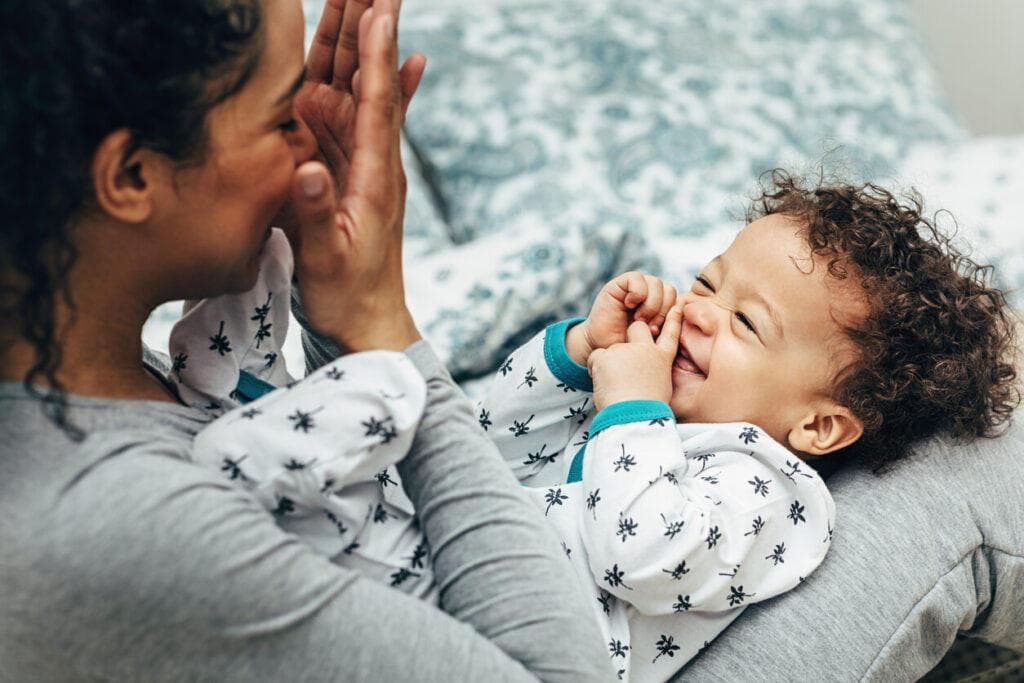
Figure 1. An adult and baby share a playful moment. Responsive interaction can be part of ordinary care. Photograph for illustration.
A toddler holds out a shoe. You notice, name it and help with the strap. The child tries again. Nothing about the moment looks remarkable, yet it offers practice in communication, movement and solving a small problem together. Such exchanges are one part of a much larger developmental process. Their value does not depend on getting every response right.
Sign in or create a free account
A free reader account lets you read two articles a day, save pieces for later, and join the conversation.