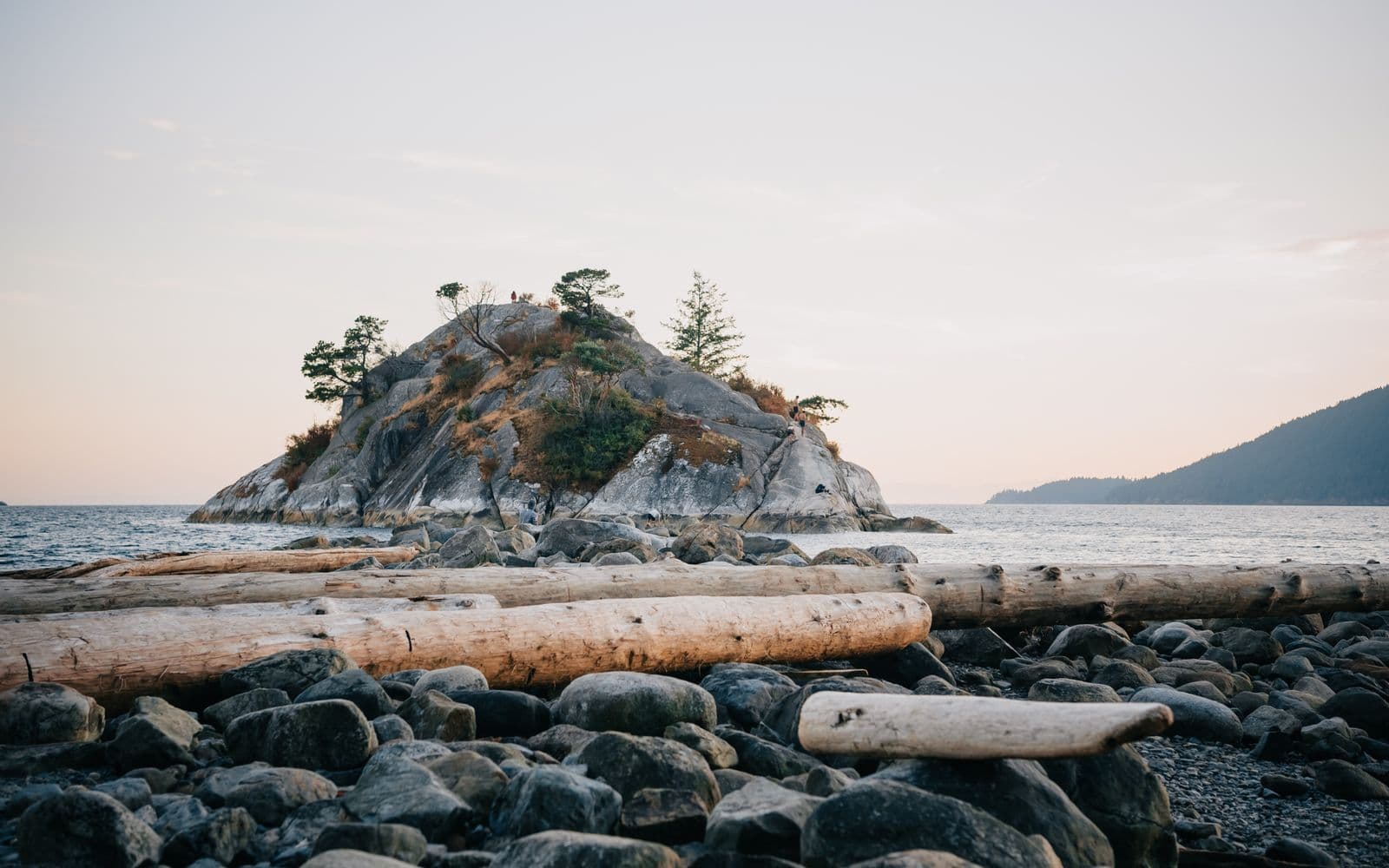
The North Island is a different trip wearing the same island's name: towns an hour apart, thinner services, more patience per kilometre, and wilder rewards — whales in Johnstone Strait, bears on the mainland inlets, Cape Scott's empty sand, and villages like Alert Bay and Sointula that nowhere else on the coast can offer.
Worth it when the North Island is the reason for going north. Not worth it when it's squeezed in to make the map look complete.
Trip snapshot
The short verdict
Yes, the North Island can be worth it. It can also be the mistake that drains an otherwise good trip. The difference is whether you're going on purpose or adding it because you saw Port Hardy on a map and thought, "we're already on the island — how far can it be?"
Far enough to change the trip. Campbell River to Port McNeill is two hours; Port Hardy, two and a half; from Victoria the far north is a six-hour drive before your first stop. Give it dedicated nights and it becomes the most memorable leg of the island. Shortchange it and it's a long drive attached to a tired photo.
What counts as the North Island
For planning purposes, the North Island is everything past the easy Campbell River corridor: Port McNeill, Port Hardy, Telegraph Cove, Alert Bay, Sointula, Coal Harbour, Port Alice, Winter Harbour, and Cape Scott at the very tip. Up here the trip stops being about polished attractions and becomes about access — boats, wildlife tours, trailheads, gravel roads, and weather. There's no single famous viewpoint with easy parking. The whole texture changes, and that's the attraction.
Why it can be worth it
Three anchors carry most northern itineraries. Telegraph Cove is the boardwalk village that fronts Johnstone Strait's orcas, with whale trips roughly June through October and grizzly day tours across to the mainland inlets in late summer. Port McNeill is the practical base and ferry hub: the short crossing from its dock serves two islands worth a day each — Alert Bay on Cormorant Island, home of the U'mista Cultural Centre and its repatriated potlatch treasures, the best cultural stop on this coast; and Sointula on Malcolm Island, a former Finnish utopian colony that still runs on its own gentle frequency. Port Hardy is the staging town for everything past the pavement.
Cape Scott is the region's strongest symbol, and it comes in honest sizes: 63 km of active logging road past Port Hardy to the trailheads, then a flat 45-minute walk to San Josef Bay's white sand and sea stacks for day-trippers, a 23-plus-kilometre one-way trail to the cape itself for backpackers, and the 43 km North Coast Trail for the fully committed. Even the easy version asks for a rougher planning style than a beach day near Parksville — that's the deal.
The north is also the answer for repeat visitors. If you've done Victoria, the Pacific Rim, Cowichan, and the east-coast beaches, going north makes Vancouver Island feel new again.
Why people regret adding it
Distance is the tax. Every hour spent reaching the north comes from somewhere — a slower Pacific Rim stay, an extra Victoria day, the luxury of not packing again. On a tight itinerary the North Island usually costs more than it gives, and treating Port Hardy or Telegraph Cove as a drive-by from a southern base is the classic version of that mistake. If you're sleeping in Victoria or Tofino, the north is not a spontaneous add-on; it belongs in a route that already made room for it.
Services are the second tax. Not impossible — just thinner. Fuel planning is real (fill in Campbell River), food hours end early, lodging is limited, and the best days depend on tour seasons and weather. A group that wants restaurant choice, short drives, and easy backups will be happier south, and a remote leg only works when everyone in the car agreed to the trade before the fuel gauge forced the conversation.
Who should go, who should skip
Go north if remote, wildlife, quiet, and unhurried describe the trip you actually want — early starts, long road sections, and days built around a boat, a trail, or a conversation in a small town. It works best with ten or more island days, or on a second visit, when the north stops competing with Victoria and Tofino and becomes its own chapter.
Skip it on a short first trip that's already juggling Victoria, Tofino, and a ferry schedule, or with a group that has low tolerance for driving, gravel, rain, and seasonal operators. That's not failure; it's the same right-sizing this whole series preaches. A tighter southern trip beats a huge route that technically reaches the top but never has time to feel it.
How many days it needs
If the north matters, protect it with nights. If you can't protect it with nights, save it for another trip.
A useful rule: don't add the North Island unless you can name what you're going for. "Because it's there" isn't enough. "Telegraph Cove and an orca tour," "Port Hardy and San Josef Bay," "Alert Bay and the U'mista," or "a slow far-north road trip" are real reasons.
A simple route that actually works
Launch from Campbell River or an east-coast base, not from Victoria in one heroic push. Night one around Campbell River, then move up for two or three nights split between Port McNeill or Telegraph Cove and Port Hardy. Spend one day on the water — whales or bears — one day on the ferry islands or a town-and-coast wander, and hold one day as weather margin or the San Josef Bay run.
If Cape Scott is on the list, build the route around it rather than around wishful thinking: the access road is shared with working logging trucks, the gravel eats timid schedules, and the trailhead is a two-hour round trip from Port Hardy before you've walked a step. None of that should scare you off. It should just stop you from treating the wildest part of the plan like an afternoon errand.
What to check before you book
DriveBC before long road days; BC Ferries if the plan leans on the Inside Passage or the Port McNeill-Alert Bay-Sointula triangle; tour operators directly for seasons, departure times, and weather policies; and lodging early, because a remote town with limited rooms fills faster than a city. For Cape Scott, check the BC Parks page and know which version you're doing — day walk, overnight, or full traverse — before you're standing at a gravel junction deciding by vibes.
Then pack the unglamorous things that make remote travel good: full tank, real food, layers, rain gear, offline maps, daylight margin, and permission to turn around when conditions outvote the plan.
The bottom line
The North Island is excellent, and it is optional. It's worth it when the north is the point: wildlife, remote coast, Cape Scott, small communities, and a slower relationship with the map. It's not worth it as the final checkbox on an overloaded loop.
Give it three or more protected nights and it will probably be the part of Vancouver Island you talk about afterward. Deny it those nights and you'll have driven twelve hours to photograph a harbour in the rain — which, to be fair, the north would find funny.
Plan with: Vancouver Island North Tourism | DriveBC | BC Ferries | BC Parks - Cape Scott. Last reviewed July 2026.