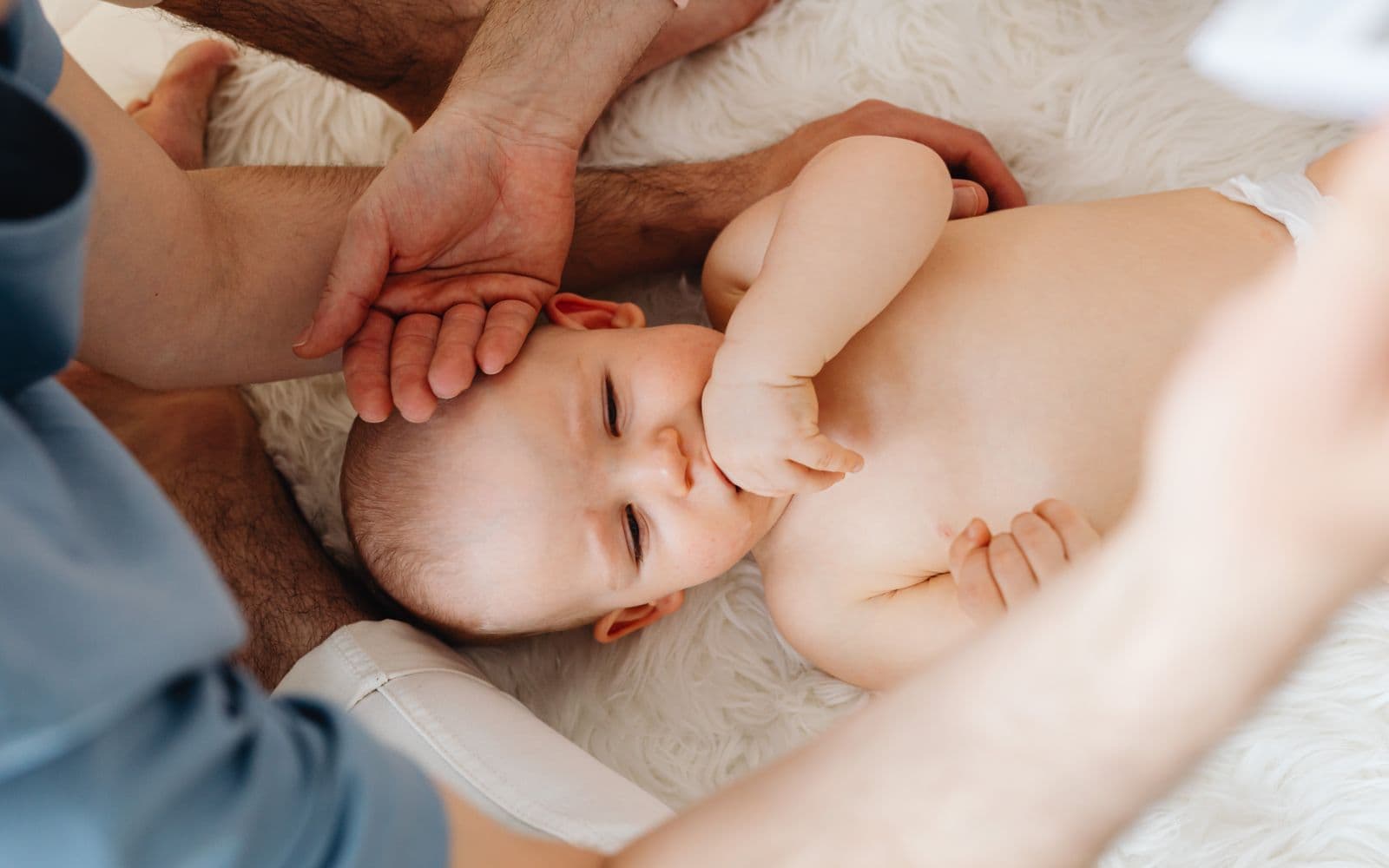
Postpartum recovery is full-body recovery
A rebuild, not a bounce-back
The phrase “bounce back” should be put in a drawer and left there to think about what it did. Postpartum isn’t a bounce — it’s a rebuild, and your body is doing several jobs at once: the uterus shrinking back down, the placental wound healing inside it, vaginal or perineal tissues or an abdominal incision healing, blood and fluids shifting, hormones recalibrating, milk production starting or stopping, the pelvic floor recovering, core muscles reconnecting — and sleep deprivation arriving like a tiny unpaid landlord. Giving birth takes a physical and mental toll, and it takes time and energy to recover while learning to care for a newborn.
The recovery timeline
Every body is different, but the first weeks often have a pattern. Don’t judge your whole future by week two — week two is a gremlin with a clipboard.
After a major event
- 01Heavy bleeding, large pads, uterine cramps shaking, chills, sweating, soreness everywhere
- 02Perineal swelling or incision pain difficulty peeing, fear of pooping, exhaustion
- 03Emotional surges you’re not porcelain, and you’re not a machine
“Why did nobody tell me this part?”
- 01Milk comes in; breasts swell fullness lasts 2–5 days; engorgement 24–48 hours
- 02Bleeding still red but gradually decreasing cramps may intensify with feeding
- 03Bathroom fear peaks; baby blues may appear sleep loss accumulates
A high-support window
- 01Bleeding lightens and changes colour lochia can come and go for ~2 months
- 02Perineal swelling improves; stitches dissolve (2–4 wks) incision may stay tender or numb
- 03Pelvic-floor symptoms become noticeable and sex, movement & birth-control questions begin
- 04The uterus returns to size in ~6–8 weeks a six-week visit is a checkpoint, not a finish line
Normal vs call now
Here’s the heart of the guide as a quick check. Tap a symptom to see what’s often normal beside what means it’s time to call — and keep the emergency line in view. Use this to replace 3 a.m. spiralling with a clear next step.
Bleeding, stitches & C-section healing
Postpartum bleeding (lochia) happens after both vaginal birth and C-section, because the uterus is healing where the placenta detached. It can last up to six weeks — heavy and red at first, then pink or brown, then yellow or white. Use pads, not tampons or menstrual cups; change them at least every four hours; rinse with a peri bottle; and don’t douche. If you had a vaginal birth, the perineum may feel bruised, swollen, and stitched, with stitches usually dissolving in 2–4 weeks. A C-section is common — and major abdominal surgery, with healing up to six weeks; hold a pillow to the incision when you cough or laugh, roll to your side to sit up, and don’t lift heavier than the baby unless cleared.
Breasts, bowels & pelvic floor
Whether you breastfeed, formula-feed, pump, or stop milk, your breasts may go through a dramatic transition — fullness, warmth, leaking, and short-term engorgement. If feeding, nurse or express often (about 8 times in 24 hours), use warmth briefly before and cold compresses between feeds, and ask for latch help early if nipples hurt. The first postpartum bowel movement can become a psychological thriller — constipation is common (a movement may take 2–3 days after a vaginal birth, 3–5 after a C-section); drink water, build fibre slowly, don’t strain, and use stool softeners if recommended. And pregnancy and birth can weaken the pelvic floor — leaking, pressure, or heaviness are common but treatable; daily pelvic-floor training helps, and you don’t need to wait until symptoms are dramatic to ask about physiotherapy.
Movement, sex & birth control
Postpartum movement should be gradual, symptom-based, and kind — start with short walks, gentle breathing, and a gentle pelvic-floor connection, progressing toward about 120 minutes a week of moderate activity over the first year. Slow down if bleeding turns bright red or heavy after activity, pain increases, you leak, or you feel pelvic heaviness. Sex isn’t a deadline: wait until bleeding has stopped and it isn’t painful (usually 4–6 weeks) and you both feel ready. And birth control matters early — you can ovulate before your first period, so breastfeeding isn’t reliable contraception unless strict LAM criteria are met (exclusive breastfeeding, baby under six months, periods not returned).
- Short walks and gentle breathing.
- A gentle pelvic-floor connection and mobility.
- Rest — and then more rest.
- Provider advice if you had a C-section or complications.
- When can I have sex again, based on my healing?
- What birth control works with breastfeeding / after a C-section?
- What if I want another pregnancy soon — or absolutely don’t?
- What if sex hurts, or I have no desire?
Emotional recovery is recovery
Baby blues are common a few days after birth — crying easily, feeling overwhelmed, mood swings, irritability — and usually improve within a couple of weeks with support and self-care. Postpartum depression can be more severe and longer-lasting, can interfere with daily life, and needs medical help. You are not failing if you need mental-health care; you are recovering in a body and brain under enormous load.
Postpartum checkups — and if you have no provider
A medical check 3–6 weeks after childbirth is important — partly because postpartum depression is often recognized there. Bring your actual questions: is my bleeding normal, is my incision or tear healing, what about constipation or pelvic-floor symptoms, when can I exercise or have sex, what birth control fits, is my mood concerning, and do I need iron or bloodwork? The six-week visit shouldn’t be a ceremonial nod at your uterus while your real symptoms wait in the car. And if you don’t have a regular provider — common in Canada, and more so for recent immigrants — try a public-health unit, 811, a midwifery or walk-in clinic, a community health centre, or a hospital maternity triage line.
Newcomer, rural & unsupported recovery
Recovery can be harder if you’re new to Canada, without coverage or a family doctor, living rurally, without nearby family, facing a language barrier, racism, a traumatic birth, parenting alone, or returning to work early. This isn’t a character test — recovery requires conditions, and if the conditions are missing, build the scaffolding early: a settlement worker, community health centre, public-health nurse, local women’s centre, Indigenous family support, interpreter services, a meal program, a crisis line, transportation help, or virtual care where available.
“Nobody told me this” symptoms
- night sweatsHormonal and fluid shifts can make you sweat intensely — change clothes and sheets, drink water, and call if it comes with fever, chills, pain, or feeling unwell.
- hair sheddingPostpartum shedding often starts later and can be dramatic and rude. Ask your provider if it’s severe, prolonged, or paired with fatigue or dizziness.
- shaking after birthShaking can happen after birth or surgery — tell your provider, especially if paired with fever or feeling unwell.
- crying at a soup adBaby blues include sudden tears. But if sadness, panic, rage, intrusive thoughts, or hopelessness persist or intensify, ask for help.
- touched outConstant newborn contact can leave you “touched out.” It doesn’t mean you don’t love your baby — your nervous system needs space.
- grief beside loveYou may grieve your old life, body, freedom, birth, sleep, or identity even with a healthy baby. Human emotions aren’t tidy little drawers.
Common mistakes
- 01 · normalizing bleedingTreating heavy bleeding as normal. Soaking pads, large clots, dizziness, bad smell, fever, or worsening pain need care.
- 02 · skipping pain medsSkipping pain medication out of pride. Pain control helps you move, feed, sleep, and heal — take it as directed.
- 03 · ignoring incision signsIgnoring incision symptoms. Redness, warmth, oozing, opening, fever, or worsening pain should be assessed.
- 04 · “just motherhood now”Assuming leaking urine is just motherhood now. It’s common — and treatable for many. Ask about pelvic-floor support.
- 05 · exercising too earlyForcing exercise too early. Bright-red or heavier bleeding after activity means slow down and reassess.
- 06 · waiting to collapseWaiting until collapse to ask for mental-health help. Anxiety, depression, intrusive thoughts, and panic can be treated — ask early.
- 07 · six-week “done”Thinking the six-week visit means you’re “done.” Recovery doesn’t obey calendar etiquette.
- 08 · hosting instead of healingHosting instead of healing. Visitors can wait; bleeding, stitches, sleep, feeding, and mental health cannot.
The recovery card & six-week log
A normal-vs-call-now card you can keep on the fridge, plus a simple weekly log so you can notice changes without turning your first weeks into a surveillance bunker. Everything you tick or type is saved on this device, and Print gives you a clean card and log for you and your support person.
Official sources & the final takeaway
Postpartum is a rebuild, not a bounce. Many symptoms are common, but common never means “ignore it” — normal recovery should gradually improve, and anything severe, worsening, or frightening deserves care. Track enough to notice changes, take pain control, ask early about pelvic floor and mental health, and don’t treat the six-week visit as a finish line. And say the symptom plainly: clear language opens doors.
Official resource box
Family-centred guidance on bleeding, cramps, breasts, bowels, mood, and warning signs.
SourceLochia, healing, hemorrhage signs, and the importance of a 3–6 week check.
SourceIncision care and urgent warning signs after a caesarean.
SourceCall or text 9-8-8, 24/7, for anyone in distress or thinking about suicide.
SourceInformation and connection to local perinatal mental-health volunteers.
Source2025 Canadian guidance on activity, pelvic-floor training, and return to exercise.
Source- Public Health Agency of Canada — Postpartum recovery & warning signs (Reviewed Jun 2026)
- Provincial postpartum guidance — HealthLink BC & MyHealth Alberta (Reviewed Jun 2026)
- CSEP — Postpartum movement & pelvic-floor guideline (2025) (Reviewed Jun 2026)
- Mental-health support — 988 Canada & PSI Canada (Reviewed Jun 2026)
- Statistics Canada — Postpartum healthcare access (Reviewed Jun 2026)
Comments