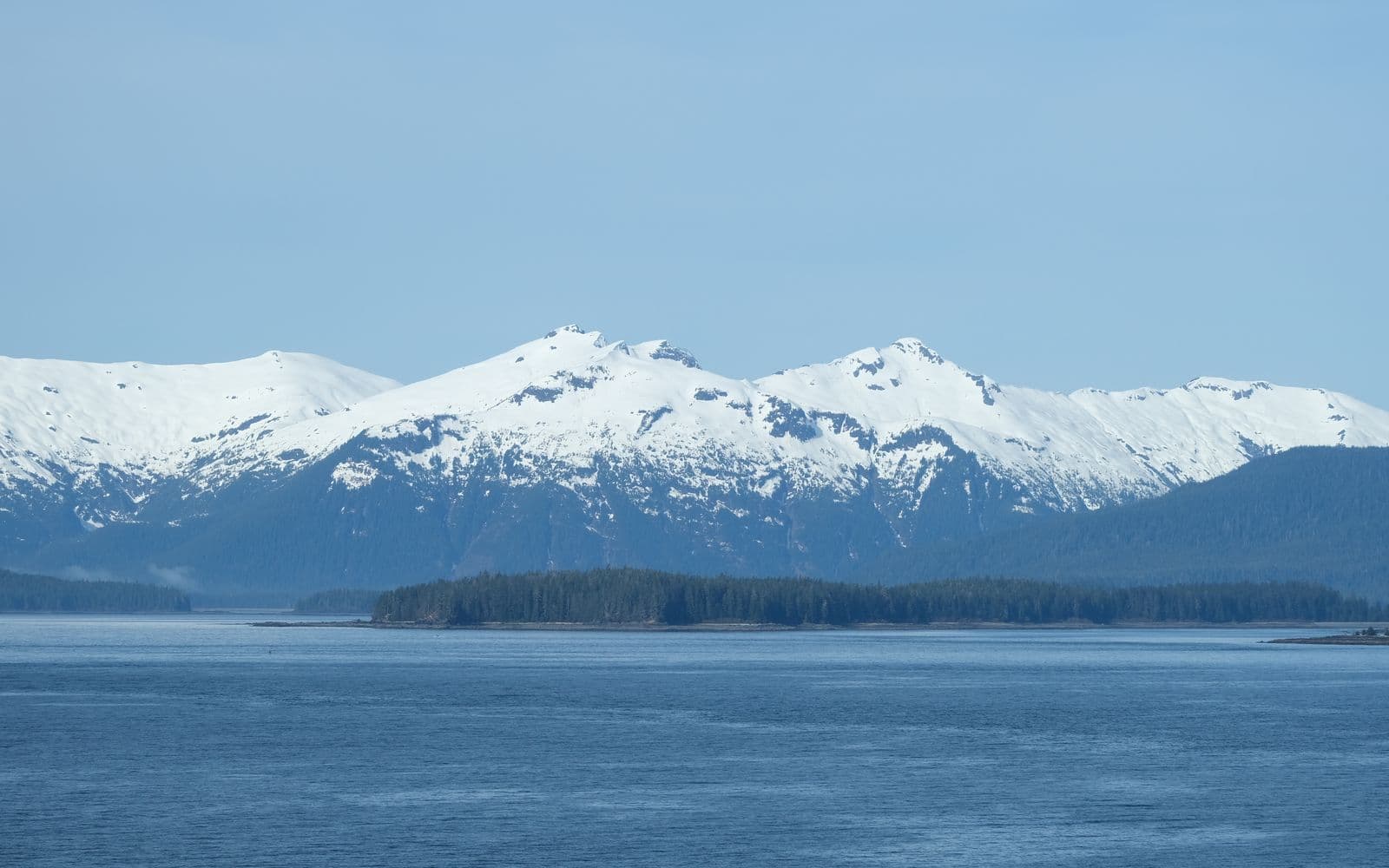
The Bear sold the Eagle a kingdom of ice for two cents an acre. Beneath the ice, the sleeping gold said nothing — and neither creature heard the door it had just left open.
It was the evening of March 29, 1867, and the Secretary of State of the United States was playing cards.
William Henry Seward was sixty-five years old, small and rumpled and endlessly ambitious, a man who had wanted to be president and had settled for reshaping the map instead. Two years earlier, on the same night Abraham Lincoln was shot, Seward had nearly been murdered in his own bed by an assassin’s knife. The scars still ran along his face. Now he sat in his Washington home over a quiet game of whist, while the republic outside his windows was still raw from civil war, Reconstruction, grief, argument, and unfinished blood.
Then came a knock at the door.
Standing on the step was Baron Eduard de Stoeckl, the Russian minister to the United States, a smooth and patient diplomat who had spent years in Washington, married an American, and learned to read the city’s moods better than many Americans could. He had come with a proposition from across the world.
His emperor was ready.
Russia was willing to sell its possessions in North America.
Stoeckl suggested, reasonably, that they meet the next day.
Seward did not want to wait.
The Council on Foreign Relations preserves the moment almost exactly: Stoeckl arrived while Seward was playing whist, and when the Russian minister proposed meeting tomorrow, Seward answered, “Why wait until tomorrow?” The men negotiated through the night and reached agreement at 4:00 a.m. The United States would pay $7.2 million for Alaska.
So the cards were left behind. Lamps were lit. Clerks were summoned. Maps were unrolled. A treaty took shape line by line while the capital slept. In the small hours of March 30, 1867, Seward and Stoeckl signed their names and traded a subcontinent for gold.
The price was $7.2 million, less than two cents an acre, for nearly 600,000 square miles. The National Archives records that the treaty was concluded on March 30, 1867, ratified by the United States on May 28, exchanged on June 20, and proclaimed on June 20.
Somewhere beyond the reach of that candlelight, thousands of miles to the northwest, a frozen kingdom changed hands in the dark.
And not one of the people who actually lived there had been asked.
This is the story of that sale. It is one of the strangest chapters in the long romance of the Eagle and the Bear: the moment the Bear, who had stretched one enormous paw across the ocean and set it down on the Eagle’s continent, decided to pull that paw back and sell the frozen edge of its empire for pocket change.
It was mocked as folly.
It became one of the greatest bargains in American history.
And beneath the joke, beneath the bargain, beneath the gold and oil still sleeping in the ground, lay two deeper truths that neither empire fully understood that night:
The land was never truly theirs to sell.
And the door they were opening led straight into the future they both feared.
IHow the Bear Reached America at All
To understand why Russia was selling a piece of North America, you first have to understand the almost unbelievable fact that Russia had claimed a piece of North America at all.
It began, as so much of Russian expansion did, with distance.
Distance and fur.
The imperial question began in the age of Peter the Great: where did Asia end, and did it touch America? Russian exploration pushed across Siberia toward the Pacific, and in the eighteenth century Vitus Bering and Aleksei Chirikov carried that question into the northern seas. The National Park Service notes that Bering and Chirikov’s explorations reached Alaska in 1741, after which Russians realized that the Siberian fur trade could be pushed farther east.
There, on the Alaskan coast and along the Aleutian chain, the Russians found the animal that would turn the North Pacific into a fever dream:
The sea otter.
The sea otter’s pelt was soft gold. Dense, warm, beautiful, and immensely valuable in the markets of China, it drew hunters, traders, adventurers, and corporate empire-builders across impossible water. Russian fur hunters, the promyshlenniki, moved east island by island, chasing the otter through the American cold.
Out of this scramble grew Russian America.
In 1799, Tsar Paul I consolidated private fur companies into the Russian-American Company, giving it a monopoly on Russia’s North American trade and entrusting it with the government of Russia’s colonies in North America.
A corporation became a colonial statelet.
It had warehouses, forts, ships, priests, managers, ledgers, guns, icons, and hunger.
Its most famous early manager, Alexander Baranov, helped build the Russian colonial capital at New Archangel, the place now known as Sitka. To Russian eyes it was a foothold. To imperial maps it looked like possession. To company officials it was a place from which furs could be gathered, stored, counted, blessed, guarded, and shipped.
But here is what the maps hid.
Russian America was never a deep inland empire. It was mostly a scattering of coastal posts clinging to the edge of an enormous land. The State Department’s Office of the Historian notes that St. Petersburg lacked the financial resources to support major settlements or a military presence along the Pacific coast of North America, and that permanent Russian settlers in Alaska never numbered more than about four hundred.
Four hundred.
Four hundred permanent Russian settlers laying claim, on paper, to a territory larger than Texas, California, and Montana combined.
The Bear had reached across an ocean.
But it had reached with a thin paw.
And it had never fully closed its fist.
IIThe Land Was Never Empty
Because the land was already full.
This is the truth that phrases like “Russian America” and “Seward’s Purchase” can accidentally bury under snow:
No one was selling an empty wilderness.
For thousands of years, long before Peter, Seward, Stoeckl, Alexander II, or the United States existed, the great northern land was home to peoples whose roots ran deeper into that ground than either empire could imagine.
The Iñupiat and St. Lawrence Island Yupik of the Arctic coasts.
The Yup’ik and Cup’ik of the western rivers and tundra.
The Unangâ of the Aleutian Islands, among the most skilled maritime hunters the world has known.
The Alutiiq/Sugpiaq peoples of the southern coast.
Athabascan peoples of the interior, including the Dena’ina, Gwich’in, Koyukon, Ahtna, Tanana, and others.
And in the southeast, the Tlingit and Haida, with clan houses, crest histories, salmon rivers, trading networks, and long political memory. Later, Tsimshian people would also become central to southeast Alaska Native history, especially after the 1887 move from Canada to Metlakatla on Annette Island, as the Alaska Native Language Center notes.
The Russians did not arrive in an empty world.
They entered worlds that already had names.
They entered economies that already worked.
They entered waters already traveled, hunted, sung, inherited, argued over, defended, and loved.
And in many places, Russian arrival was not merely contact. It was catastrophe.
The National Park Service describes how Russian traders forced many Unangâ people to hunt sea otters for them, often through violence, and how starvation, hardship, and disease reduced the Unangâ population by nearly 80 percent during this period.
That number is so large it almost refuses to fit inside language.
Nearly 80 percent.
Not a wound.
A shattering.
The fur trade that filled company warehouses emptied villages, bent families into forced labor, and turned the genius of Indigenous maritime hunting into an engine for someone else’s profit.
In southeast Alaska, the Tlingit fought back and did not simply vanish from the story. The National Park Service records that the Sitka Tlingit attacked and destroyed the Russian fort in 1802; two years later Baranov returned, the Battle of 1804 followed, and even after New Archangel was founded, the Tlingit continued conflict and pressure against the Russian settlement for decades.
So when you read that Russia “sold Alaska” in 1867, hold two facts together.
In the ledgers of European diplomacy, Russia’s claim was real.
On the ground, Russia’s power was partial, coastal, corporate, contested, and built over Indigenous sovereignty it had never truly extinguished.
The Alaska Historical Society notes that an 1870 Treasury Department report recorded the Tlingit position clearly: the Tlingit had never recognized the Russians as owning their land, and they believed the Russians should at least have consulted them before presuming to sell it.
There is the sentence that cuts through the whole ceremony:
You cannot sell what was never yours.
The Bear was about to sell a house it had only camped beside.
And it would sell that house to the Eagle without asking the people who lived inside.
IIIWhy the Bear Wanted Out
Empires rarely sell land.
They bleed for it. Lie for it. Pray over it. Rename it. Tax it. Garrison it. Draw it in red or blue or gold on schoolroom maps.
So why would Russia, a state whose political memory had been shaped by the terror of invasion and the hunger for strategic depth, voluntarily sell away a fifth of its claimed holdings?
The answer, as so often with the Bear, was fear.
And the fear had a name:
Britain.
In the 1850s, Russia had fought the Crimean War against an alliance that included Britain and France. The war exposed Russian weakness, strained the treasury, and taught St. Petersburg a hard lesson about British sea power. The State Department notes that defeat in the Crimean War reduced Russian interest in Alaska, and that St. Petersburg lacked the resources to defend or develop the colony properly.
Look at Alaska the way Russian officials did.
It was far away.
It was expensive.
Its fur profits were fading.
It sat beside British North America, soon to become Canada.
In a future war with Britain, the Royal Navy could seize it.
Russia could not defend it.
So the logic became cold and elegant: if the Bear could not hold its frozen paw in America, better to sell it to Britain’s rival than lose it to Britain for nothing.
The Library of Congress describes this logic directly. Russian officials, including Grand Duke Konstantin Nikolaevich, believed the United States would eventually dominate North America and that Russia might as well be paid before the colony was seized by either the United States or Great Britain. The same Library of Congress account notes that Russia and the United States were drawn together in this period by common hostility toward Great Britain.
That is the part people often miss.
Selling Alaska to America was not just a fire sale.
It was a chess move.
Give the frozen north to the Eagle, and Britain gains a new neighbor on the Pacific flank.
Give the territory to the United States, and a distant liability becomes a diplomatic gift.
Turn a weak colony into cash.
Turn a probable loss into a strategic inconvenience for Britain.
The Bear was not being generous.
The Bear was not blessing American destiny.
The Bear was using the Eagle against the Lion.
And the Eagle, as it happened, was delighted to be used.
IVWhy the Eagle Wanted In
William Seward had wanted Alaska long before Stoeckl knocked on his door.
He was one of those nineteenth-century Americans whose mind did not stop at the Mississippi, the Rockies, California, or even the Pacific coast. Seward imagined the United States as a power of oceans. He looked west and saw not the edge of the country, but the beginning of a larger American future: Pacific trade, Asian markets, North Pacific whaling and fishing, naval reach, commerce, and influence.
The Library of Congress describes Seward as an ardent expansionist who saw Alaska as part of Manifest Destiny and America’s drive to the Pacific.
So when Russia offered, Seward did not see a useless icebox.
He saw a hinge.
A northern gate.
A stepping stone toward Asia.
A way to stretch the map without firing a shot.
The Civil War had delayed earlier Russian overtures. But by 1867, the Union had survived, slavery had been abolished, and the United States was beginning to imagine itself again not only as a wounded country, but as an expanding one.
That expansion was not innocent.
American expansion never was.
It carried settlement, military power, racial hierarchy, treaty-breaking, extraction, hunger, and language about destiny that often worked like perfume sprayed over conquest.
But Seward saw the future with unnerving clarity.
He believed Alaska mattered.
He believed the Pacific mattered.
He believed the United States would one day need what that northern land could offer.
And so came the candlelit night, the four o’clock signature, and the number:
$7.2 million.
Less than two cents an acre — for nearly 600,000 square miles.
The National Archives records the purchase price and the treaty of cession; the Office of the Historian frames the purchase as an important step in the United States’ rise as a great power in the Asia-Pacific region.
On paper, it was a land deal.
In history, it was a hinge.
The Eagle had bought the roof of the continent.
It just did not yet know what was hidden in the rafters.
VSeward’s Folly
The mockery is the part everyone remembers.
And yes, some of it was vicious and funny.
Alaska was called Seward’s Folly.
Seward’s Icebox.
Seward’s Polar Bear Garden.
Critics asked what America wanted with a territory of glaciers, bears, walruses, snow, rock, and frozen emptiness. The U.S. Senate Historical Office records several of these attacks, including the New York World’s sneer that Russia had sold America “a sucked orange.”
It is a perfect insult.
A sucked orange.
A fruit with all its sweetness gone.
A rind.
A leftover.
A cold joke at the edge of the map.
But here the legend needs correction.
The story that all Americans mocked the purchase is too easy. The mockery was loud enough to survive in every schoolbook, but it was not the whole country speaking. Some newspapers and politicians were skeptical, but others saw commercial and strategic value. More importantly, the treaty did not limp through the Senate. It passed decisively.
And the man who made that possible was not Seward alone.
It was Charles Sumner.
Sumner, chair of the Senate Foreign Relations Committee, began skeptical. Then he buried himself in reports, maps, journals, scientific descriptions, and accounts of the land. On April 8, 1867, he spoke for three hours in support of the treaty. The next day, the Senate approved ratification by a vote of 37 to 2.
Sumner also pushed for the name “Alaska,” drawn from an Indigenous word associated with the great land or mainland, instead of some borrowed European classical name.
So Seward’s Folly was never only Seward’s.
It was also Sumner’s project.
And it was not folly in the Senate’s final judgment.
The real fight came later, when Congress had to appropriate the money.
President Andrew Johnson was locked in a bitter fight with Congress over Reconstruction, a battle that would end in impeachment. The Library of Congress notes that Johnson’s impeachment delayed the final appropriation, leaving the Russian government waiting more than a year to be paid.
Then came the smoke of lobbying payments and bribery suspicions.
The National Archives records that Stoeckl promised Robert J. Walker $20,000 in gold to lobby for the appropriation; the House later investigated the affair, but its final conclusion was, in the archive’s quoted phrase, “barren of affirmative or satisfactorily negative results.” Russian records later indicated that Stoeckl had secretly disbursed almost $200,000, and the National Archives account says it seems likely that some money went to other lobbyists and to congressmen.
So the payment had its own little fog bank of Washington intrigue.
The treaty was signed in 1867.
The formal transfer happened in 1867.
But the money did not fully move until 1868.
On August 1, 1868, the Treasury issued the draft payable to Stoeckl.
The Russian Empire, where the tsar did not need to argue with a legislature before making a decision, had to watch the American system do what the American system often does best:
Turn a simple thing into a constitutional swamp opera.
The Bear sold the ice.
The Eagle agreed to buy it.
Then the Eagle spent more than a year arguing with itself about the bill.
VIThe Flag at Sitka
On October 18, 1867, in the little capital of New Archangel, the transfer became visible.
Russian and American representatives gathered at Sitka. Soldiers assembled. Speeches were made. The Russian imperial flag was lowered, though even that ceremony stumbled when the flag got stuck. Then the Stars and Stripes went up in its place. The National Archives records the formal exchange at Sitka on October 18, 1867.
The Bear’s long, strange, thin-pawed adventure in North America was over.
The Eagle now held Alaska.
But look closely at that hillside.
Ask who is missing from the treaty table.
Ask who was not invited into the candlelit room.
Ask who did not sign.
The Tlingit, on whose ancestral land Sitka stood.
The Unangâ, who had suffered devastation under Russian fur exploitation.
The Iñupiat, Yup’ik, Cup’ik, Alutiiq/Sugpiaq, Athabascan peoples, Haida, and others whose homelands were folded into the transaction without consent.
The sale did not settle their sovereignty. It ignored it.
The Alaska Historical Society’s account of the Treaty of Cession and Alaska Native rights records the Tlingit view from 1870: they had never recognized Russian ownership and believed they should have been consulted before the sale.
The treaty sorted Alaska Native people through the blunt language of nineteenth-century empire, distinguishing between groups who might be folded into citizenship and those who would be governed under federal authority. Its terms left confusion, dispossession, and unequal treatment in the snowdrifts behind the ceremony.
And the long reckoning did not come quickly.
The Alaska Native Claims Settlement Act was not signed until December 18, 1971, more than a century later. The Department of the Interior describes ANCSA as an attempt to resolve long-standing issues surrounding aboriginal land claims in Alaska, and as the largest land claims settlement in U.S. history at the time.
More than one hundred years.
That is how long the descendants of people who were never asked had to wait before the United States began, imperfectly and controversially, to build a legal settlement around claims that had been stepped over in 1867.
The Eagle had bought a frozen kingdom from an empire that never truly owned it.
And now the Eagle had to live with the ghosts in the deed.
VIIThe Sleeping Gold
The mockers had one thing exactly backward.
They thought the Eagle had bought a frozen nothing.
The Eagle had bought one of the richest pieces of ground on the face of the earth.
For decades after the purchase, the joke seemed to breathe. Alaska was distant, undergoverned, expensive to reach, and easy to ignore. The United States often treated it less like a prize than an attic: useful perhaps, but cold, remote, and full of things no one had properly inventoried.
Then the ground began speaking.
Gold.
The Klondike Gold Rush of 1896-1898, though centered in Canada’s Yukon, sent tens of thousands north through Alaska and made the region impossible to ignore. The National Archives notes that criticism of the purchase persisted until the Klondike strike helped convince even harsh critics that Alaska was valuable.
Then came Alaska’s own gold rushes.
Nome.
Fairbanks.
Creeks, beaches, black sands, frozen camps, stampeders, dogs, sleds, hunger, fortunes, frauds, frostbite, and men driven half-mad by the belief that the earth might open for them if they struck it hard enough.
And gold was only the first voice.
There were salmon runs that would feed markets across oceans.
Forests.
Copper.
Strategic harbors.
Military importance.
And then the sleeping giant:
Oil.
In 1968, exploration culminated in the discovery of Prudhoe Bay, described by the U.S. Geological Survey as North America’s largest oil field.
The Trans-Alaska Pipeline that followed turned the northern landscape into one of the great energy arteries of the United States.
Two cents an acre — for gold, fish, copper, timber, military reach, oil, and a northern position that would become priceless.
The Bear had crossed an ocean chasing sea otter fur, then sold the whole frozen edge of its empire when the fur thinned, the costs rose, and Britain looked too near.
It never heard the immense fortune breathing under the rock.
But even the gold and oil are not the deepest irony of what Russia sold that night by candlelight.
The deepest irony is measured in miles.
Two point four of them.
VIIIThe Fantasy Layer: The Kingdom of Ice
In the mythic telling, the Bear grows weary in the far north.
It has stretched one paw across the freezing sea and set it down on the Eagle’s own continent, on a white shelf at the top of the world. For a long time, the paw rakes the shore for soft gold: the fur of the little sea-people who dive in cold water. Ships carry that treasure home. Ledgers grow fat. Company men bless the profit and ignore the bones beneath it.
But the little sea-people grow scarce.
The old Lion of the seas, the one the Bear has feared for a century, prowls nearby.
The Bear looks at its far paw and feels the ache of distance.
It thinks:
I cannot hold this.
And then:
If I cannot hold it, the Lion may take it.
So the Bear does a cunning thing.
It turns to the young Eagle and says:
Here. Take my kingdom of ice. Give me two small coins for it. Plant yourself here against the Lion’s flank. Make the Lion look over its shoulder at you instead of me.
The Eagle takes the frozen kingdom.
Everyone laughs. A garden of walruses. A palace of snow. A refrigerator at the end of the earth. Two coins wasted on a white nothing.
But under the ice, the gold is listening.
It has been listening for ten thousand years.
It says nothing.
It waits.
The Bear pockets its coins and turns for home, pleased with its cleverness, certain it has shed a useless frozen limb and struck a blow at an old rival.
It does not notice what it has actually done.
It has not merely sold the Eagle a wasteland.
It has sold the Eagle a doorway.
The one doorway where the Bear’s land and the Eagle’s new land nearly touch.
The Bear has spent centuries fearing encirclement, fearing enemies at the border, fearing hostile powers pressing close. And with its own paw, for two small coins, it has just handed its future rival a border.
The kingdom of ice was never only the prize.
The prize was the door.
And the Bear gave the key away.
IXThe Truth Under the Ice: Two Islands, Two Miles, Two Tomorrows
Find the place on a map, and the whole meaning of 1867 rearranges itself.
Out in the Bering Strait, in the cold gap between Siberia and Alaska, there are two small rocky islands.
Big Diomede.
Little Diomede.
NASA Earth Observatory notes that Big Diomede belongs to Russia, Little Diomede belongs to the United States, and only 3.8 kilometers, or 2.4 miles, separate them. The water between them is bisected by the maritime border, and the passage was historically nicknamed the “Ice Curtain” because of Cold War tension.
That is the shiver.
The border created by the Alaska Purchase runs through the narrow gap between two islands.
Big Diomede stayed Russian.
Little Diomede became American.
At first, it was only a line on cold water.
Then came the twentieth century.
The Russian Empire collapsed.
The Soviet Union rose.
The United States became a superpower.
And the Eagle and the Red Bear, who had once shaken hands over Alaska and commerce and strategy, turned to face each other across the planet as enemies with nuclear suns in their mouths.
At exactly one place on earth, their territories stood almost close enough to shout across.
Two and a half miles.
One frozen ribbon.
One border.
One historical joke with teeth.
On a clear day, people in Little Diomede can see Big Diomede and even the Russian mainland from the American side. NASA notes that Little Diomede’s community sits on the island’s western side, facing Russia across the water.
And there is one more layer.
The two islands are separated not only by country, but by calendar.
The International Date Line runs between them, which is why they are often called Yesterday Island and Tomorrow Island. Big Diomede and Little Diomede sit on opposite sides of the date line.
Yesterday and Tomorrow.
America and Russia.
Two miles and a day apart.
That sounds invented.
History does not care. It keeps being theatrical without asking permission.
But to the Iñupiat people of the region, this was not a theatrical border. It was family, travel, kinship, trade, and memory cut by empire. The strait was not an empty line to them. It was part of their world.
In 1948, as Cold War tension hardened, the Soviet government forcibly evacuated Big Diomede’s Native population, moved people to the mainland, and turned the island into a military base, according to National Geographic’s account of Little Diomede and the Ice Curtain.
The Ice Curtain did not only separate governments.
It separated relatives.
It cut through a human world that had existed long before Russia or America drew flags over the water.
And beneath even that is an older ghost.
The Bering Strait is one of the places central to discussions of how humans first entered the Americas. The National Park Service notes that traditional knowledge and Western science both matter in understanding first peoples; archaeological and genetic evidence shows people have been in North America for at least 23,000 years and possibly 30,000 years, and one first route crossed the landmass linking Siberia and Alaska, though routes and timing remain debated.
So be careful with the old simplified sentence.
Do not say every Indigenous nation began by walking across that bridge, as if one theory can flatten thousands of nations and origin traditions.
Say this instead:
Long before Russia and America drew a border there, Beringia was a passage between worlds.
A place of land, sea, ice, migration, memory, and mystery.
The Bear sold the Eagle the front door of the hemisphere.
A century later, that door became the place where the two of them stood closest, and feared each other most.
XClosing Scene: A Swimmer in the Ice Curtain
Hold one last image.
Let it be hopeful, because hopeful images are rare in this story, and this one is true.
On August 7, 1987, in the last cold years of the Cold War, an American long-distance swimmer named Lynne Cox stepped into the freezing water off Little Diomede and swam toward Big Diomede.
From the United States to the Soviet Union.
From Yesterday toward Tomorrow.
From the Eagle’s shore toward the Bear’s.
The National Park Service describes Cox’s swim as a peace gesture across the U.S.-Soviet border in the Bering Strait. She had waited years for permission, and it finally came from Mikhail Gorbachev only shortly before the swim.
The water was brutal.
The fog dangerous.
The politics colder than the sea.
Inupiaq guides accompanied her in traditional boats, and for them the crossing carried a pain older than the headlines: they were going toward relatives on the Russian side whom many had not been able to see for decades.
When Cox reached the Soviet shore after more than two hours in the water, she did not touch stone first.
She reached people.
Hands pulled her from the cold.
A Soviet doctor warmed her.
The border, for one impossible moment, opened.
Later that year, when Gorbachev traveled to Washington to sign a nuclear weapons treaty, he and President Ronald Reagan raised a glass to toast Lynne Cox. Gorbachev said her courage showed how close the peoples lived to each other.
For a moment, across the very water Russia had sold and America had bought, the Eagle and the Bear did not glare.
They applauded the same human act.
But that is 1987.
The Cold War is nearing its end.
And we are getting ahead of ourselves.
In 1867, none of it exists yet.
There is only Seward putting down his cards.
There is Stoeckl at the door.
There are clerks pulled from bed and candles burning low.
There is a treaty line drawn through distant ice.
There is a flag coming down in Sitka.
There are Alaska Native peoples watching two empires trade what was not theirs.
There is gold under the ground that says nothing.
There is oil beneath the Arctic slope, waiting in the dark.
There are two islands in the Bering Strait, two miles apart, one Russian, one American, with tomorrow on one side and yesterday on the other.
The Bear thought it was selling a frozen mistake and outfoxing Britain.
The Eagle thought it was buying a bargain and a gateway to Asia.
And history, that old cartographer with ink-black fingers, quietly folded the map, marked the two islands, and waited.
If you sell your enemy’s rival the very ground where your two countries come closest, have you pushed danger away from your border, or built it a door?
This episode draws on the Council on Foreign Relations for the Seward-Stoeckl whist and overnight negotiation scene; the National Archives for the treaty, payment, Senate and House appropriation details, the Sitka transfer, and the treasury warrant; the U.S. Department of State Office of the Historian for Russia’s reasons for sale, the $7.2 million purchase, Russian settlement limits, and the purchase’s importance to U.S. Pacific power; the National Park Service for Russian America, Bering and Chirikov, the Russian-American Company, the sea otter fur trade, Unangâ history, and Tlingit resistance; the Library of Congress for Seward, Manifest Destiny, Grand Duke Konstantin’s strategic reasoning, and the U.S.-Russia-Britain triangle; the Alaska Historical Society for the Tlingit position on Russian ownership and consultation; the University of Alaska Fairbanks Alaska Native Language Center for the Tsimshian/Metlakatla timing; the Department of the Interior for ANCSA; USGS for Prudhoe Bay; NASA Earth Observatory for the Diomede Islands, the 2.4-mile gap, the Ice Curtain, and the International Date Line; National Geographic for the 1948 Big Diomede evacuation; and the National Park Service profile of Lynne Cox for the 1987 swim and Reagan-Gorbachev toast.

Comments