Three Generations, One Shop
This essay was written by the editorial desk — the narrator is a composite, not a real entrant. It's here to demonstrate story, connection, and an honestly scoped way forward.
“I grew up behind a shop counter, certain my real life would begin somewhere else. Years later, a drawing brought me back to the way I used to see.”
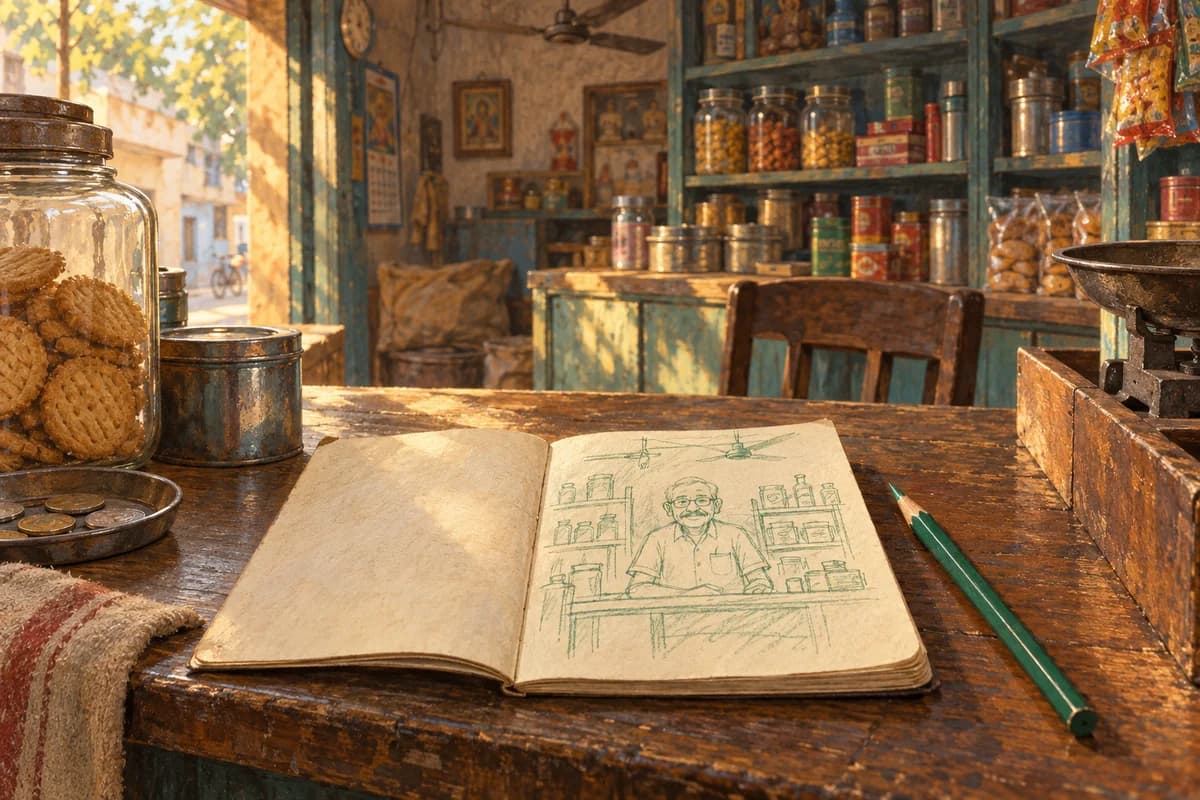
My grandfather opened the shop, my father took it over, and I occupied the space behind the counter where the spare paper was kept. I drew on the backs of delivery slips while the adults worked. There were drawings of customers, a dog who slept against the shutters, and the same crooked ceiling fan seen from below. I gave everyone enormous hands. Hands were what I could see from my stool: counting coins, folding a receipt, resting on the counter while someone decided what to say.
At school, when we were asked what we wanted to become, I wrote things that sounded like they belonged somewhere else. I wanted a life with a title I could explain quickly. Drawing was something I did between more important things. By the time I left home, I had learned to answer questions about my future without mentioning it. I could still spend twenty minutes looking at the way light reached a room, but I would have been embarrassed to put that on a list of things I was good at.
Years later, I was visiting when my father asked me to help clear a cupboard. Between an old calendar and a box of rubber bands was a drawing of my grandfather at the counter. I remembered the green pencil immediately. I remembered pressing so hard to make his shirt dark enough that its tip broke. He was looking down in the picture, with one hand resting on a packet of biscuits. I had drawn the small space between his fingers as carefully as his face. My father had kept it folded inside a delivery book. When I asked why, he said, ‘That is how you saw him.’
I sat with the paper on my knees. I had expected to feel affection for the child who drew it. Instead, I felt recognition. I still noticed hands before faces. I still watched what people did when they thought nobody was paying attention. I had been treating this attention as a leftover habit, something that had survived my education by accident. Seeing it on the page made me wonder how many decisions I had made around the idea that only the parts of me other people could measure were worth developing.
The next morning I bought a notebook from the shop. My father tried to refuse the money, then charged me and carefully counted out the change. I drew his hand later, from memory, and got the thumb wrong. There was no revelation about what I should do for a living. I returned to my work and the ordinary demands of my week. But I kept the notebook in my bag. Sometimes I filled a page; sometimes I looked at something for a little longer because I knew I might draw it.
I still want things I cannot yet name, and I still feel impatient with the life I have sometimes. The drawing did not settle those questions. It reminded me that I can make room for something without knowing what it will become. When I visit the shop now, I see three generations in the same small space: my grandfather in a drawing, my father behind the counter, and me trying to look closely enough to remember. For a few minutes, looking feels like something worth doing in itself.
Replies
Loading replies…