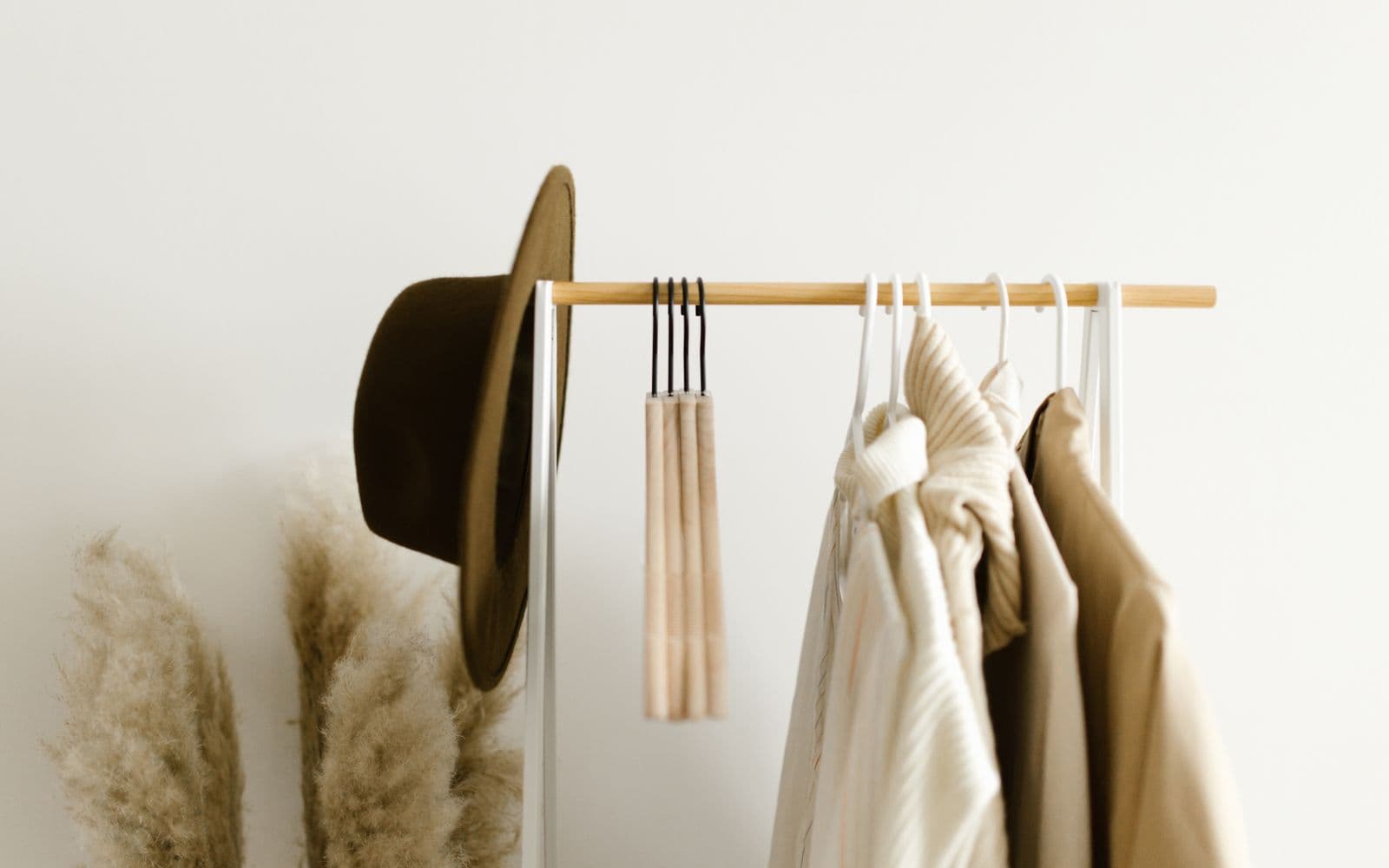
A capsule wardrobe is not an aesthetic. It is a decision system: a small set of clothes you actually wear, in colours that all pair, matched to the life you actually live. Built right, it ends the daily "nothing to wear" negotiation in front of a full closet — because the full closet was the problem.
Two traps to name before starting. First, the marketing version: "capsule wardrobe" has become a category of shopping content that ends with buying a whole new wardrobe — this guide is built on the opposite move, subtracting first and buying almost nothing for a month. Second, clothes sit close to body image; if wardrobe work turns into a referendum on your body, pause the project. The capsule serves the body you have on the day you get dressed, not a former or future one.
This is the twenty-ninth guide in the How To methods library,[1] and like the others it runs on a method you can execute in weeks, not a mood board.
Part One: What Closets Actually Look Like
The full-but-nothing-to-wear closet is not a personal failing; it is the documented norm. When the UK's waste-reduction agency surveyed the nation's wardrobes, roughly 30 percent of the clothes in them had not been worn in the previous year.[2] Globally the trend line is steeper: the average number of times a garment gets worn fell by about 36 percent in fifteen years, while the equivalent of a garbage truck of textiles is landfilled or burned every second.[3] In the U.S. alone, about 11.3 million tons of textiles went to landfill in a single year.[4]
Read those numbers again as a personal audit: a third of what you own is furniture, and the churn that produced it never made getting dressed easier. The capsule is the exit from that loop — not because minimalism is a virtue, but because the loop does not work.
Empty the closet completely and audit every piece against two questions: did I wear this in the last year, and does it fit the life I actually live? Sort what survives into a working wardrobe sized to your real week — not your imaginary one. Pick a palette of two base neutrals and two or three accents so nearly everything pairs. Run a season on roughly 30 to 40 items, using the leftovers as a supervised reserve rather than donating in a purge frenzy. Then fill genuine gaps slowly: a thirty-day wait list for every purchase, cost-per-wear math before checkout, one in, one out. Review at each season change. The goal is not owning little. It is deciding once.
Part Two: The Audit — Everything Out, Everything Judged
Do this on a bed, on a weekend morning, with two hours and no shopping apps open. Every single item comes out of the closet and drawers. You are building four piles.
| Pile | Test | Destination |
|---|---|---|
| Love and wear | Worn in the last few months, fits today, you feel like yourself in it. | The working wardrobe. This pile is the capsule's seed. |
| Love but never wear | You keep it, you skip it. Ask why out loud: wrong size, wrong life, needs repair, guilt purchase? | Fixable ones get one fix (tailor, repair) this month. The rest go to the reserve box. |
| Meh | Worn only when laundry has beaten you. No feeling either way. | Reserve box now, exit at season's end if unmissed. |
| Done | Damaged beyond repair, wrong for your life by a mile, unworn for years. | Sell, donate wearable pieces, textile recycling for the rest — not the bin.[4] |
The five audit questions
1. Have I worn this in the last twelve months? (Season-specific pieces get their season as the window.)
2. Does it fit the body I have today — not after any project?
3. Does it fit the life I actually live this year?
4. If I saw it in a store today, would I buy it again at full price?
5. Does it pair with at least three other things I own?
Two or more "no" answers: it leaves the working wardrobe. The box, not the bin — regret insurance costs one box.
Everything that leaves the working wardrobe goes into a sealed box, dated, kept for one season. Anything you dig back out has re-earned its place. Anything still boxed at the season's end leaves the house without a second audit. This one rule removes the fear that makes people quit the audit halfway.
Part Three: Dress the Life You Have
Most overstuffed closets are costume departments for imaginary lives: the gala wardrobe of someone who attends one wedding a year, the hiking gear of an aspirational weekend self, the office wear from two jobs ago. The fix is arithmetic, not judgment. Count your actual week.
| Your real week | Share of your time | Share of your wardrobe it deserves |
|---|---|---|
| Work — office, hybrid, site, scrubs | Five days for most people | Roughly half the working wardrobe. |
| Off-duty — errands, family, couch, friends | Evenings and weekends | Most of the rest. |
| Movement — gym, runs, sport | However many sessions are real, not aspirational | Enough for one laundry cycle. No more. |
| Occasions — weddings, interviews, funerals | A handful of days a year | One or two complete, current outfits. Not a wing of the closet. |
When the wardrobe's proportions match the week's proportions, getting dressed stops being a search problem. Spending research backs the reallocation, too: money aimed at frequent small pleasures and at experiences reliably buys more happiness than another rarely-worn statement piece[5] — and experiential purchases hold their glow longer than material ones.[6] The dinner with friends outperforms the third pair of boots you will wear twice.
Part Four: Why Fewer Clothes Feel Better — the Actual Mechanism
The capsule's payoff is cognitive, and the research is specific about why. Large option sets can demotivate and reduce satisfaction — the famous jam-table experiments found more variety attracted more browsers but produced fewer, less satisfied choosers.[7] A later meta-analysis sharpened the conditions: choice overload bites hardest exactly when options are numerous, similar, and hard to compare — which is a precise description of a rail of near-identical tops at 7:40 a.m.[8]
There is a personality tax, too. People who approach decisions as maximizers — hunting the single best option every time — report reliably less satisfaction with their choices than satisficers, who pick the first option that clears their bar.[9] A capsule is satisficing made of fabric: every option in the closet already cleared the bar, so any morning grab is a good answer. That is the whole psychological trick, and it is why the system survives busy weeks that break more ambitious routines.
One popular claim deserves a hedge. "Enclothed cognition" — the finding that wearing a lab coat described as a doctor's coat sharpened attention — suggested clothes change how the wearer thinks.[10] A large preregistered replication later failed to reproduce the effect,[11] so treat "dress for the job" as folk wisdom with mixed evidence. You do not need the strong version anyway: it is enough that you feel like yourself in everything you own, which is what the audit already guaranteed.
Part Five: The Palette — Two Neutrals, a Few Accents
Colour is where capsules live or die, because pairing is what turns 30 items into a hundred outfits. The rule is small: two base neutrals, two or three accents, and near-total pairability inside that set.
| Slot | What it is | Examples |
|---|---|---|
| Base neutral 1 | The colour of your trousers, skirts, outerwear — the structure. | Navy, black, charcoal, dark brown. |
| Base neutral 2 | The light counterweight; most tops and shirts. | White, cream, oatmeal, light grey. |
| Accents (2–3) | Where your taste lives: knits, dresses, scarves, one jacket. | Rust, olive, burgundy, mustard, dusty blue — whatever you already reach for. |
| Metals and leathers | Belt, shoes, bag, jewellery — pick one lane each so they never argue. | Brown or black leather; gold or silver. |
Choosing the accents is not a theory exam. Open the "love and wear" pile from the audit: the palette is already lying on the bed. The colours you actually wear, photographed and named, beat any seasonal analysis a store can sell you. Write the four or five colour names on a card; that card now lives in your wallet and quietly vetoes off-palette impulse buys.
Part Six: The Capsule Math
The best-known formalization is Courtney Carver's Project 333 — dress with 33 items for 3 months, everything else boxed.[12] Treat 33 as a proof-of-concept number, not a law: most people land comfortably between 30 and 45 per season once underwear, sleepwear, and true activewear are exempted (they should be — counting socks is how systems die of pedantry).
The arithmetic is the persuasive part. Ten tops, five bottoms, and three outer layers is only eighteen items, but it is 10 × 5 × 3 = 150 outfit combinations — and inside a palette, nearly all of them work. Nobody needs 150 outfits a season. Which is the point: even a small capsule is combinatorially enormous once everything pairs.
| Category | Season count (guide, not law) | Notes |
|---|---|---|
| Tops — shirts, tees, blouses | 9–12 | Mostly base neutral 2, a few accents. |
| Bottoms — trousers, skirts, jeans | 4–6 | Mostly base neutral 1. Every top should sit on every bottom. |
| Layers — knits, blazers, cardigans | 4–6 | Where accents earn their keep. |
| Dresses or one-piece options | 0–4 | To taste; each must work with the layers you own. |
| Outerwear | 2–3 | One serious, one casual. Climate rules here. |
| Shoes | 4–6 | Daily pair, weather pair, movement pair, occasion pair. |
| Occasion kit | 1–2 outfits | Complete, current, tried on annually. Exempt from daily rotation. |
Part Seven: A Worked Example — One Autumn Capsule
Abstract category counts become obvious the moment they wear a real palette. Here is what a 36-item autumn capsule looks like for a hybrid office worker whose palette card reads: navy, cream, rust, olive, brown leather, gold.
| Category | The items | Count |
|---|---|---|
| Tops | Four cream/white shirts and tees, two navy knits, one rust roll-neck, two olive tees, one striped shirt. | 10 |
| Bottoms | Navy trousers, charcoal trousers, dark jeans, olive chinos, one navy skirt. | 5 |
| Layers | Navy blazer, cream cardigan, rust overshirt, grey hoodie for off-duty. | 4 |
| Dresses | One navy knit dress that works with every layer above. | 1 |
| Outerwear | Wool coat (navy), rain shell (olive), light jacket. | 3 |
| Shoes | Brown boots, white sneakers, brown loafers, trainers, one occasion pair. | 5 |
| Movement | Two full gym sets sized to a weekly wash. | 6 |
| Occasion kit | One complete wedding/interview outfit, tried on at season change. | 2 |
Thirty-six items, every top on every bottom, every layer over every top. That is several hundred working combinations from a wardrobe that fits in a metre of rail — and none of the combinations is a mistake, because the palette card did the arguing months ago. Your list will differ; the shape of it should not.
Part Eight: Make Clothes Last — the Other Half of the System
A capsule concentrates wear on fewer garments, so care stops being optional. This is also where the environmental math pays out: extending a garment's active life by even a few months measurably cuts its carbon, water, and waste footprint.[2]
The care rules that matter
1. Wash colder and less often. Most outer layers need airing, not laundering; jeans survive on a fraction of the washes they get.
2. Knits dry flat, never hang — hangers grow shoulders on sweaters.
3. Fix the week it breaks: a loose button or opening seam costs five minutes now, the garment later.
4. Find a tailor before you need one. Hemming and taking-in turn near-miss purchases and body changes into custom fits for a fraction of replacement cost.
5. Store the off-season set clean, dry, and sealed — moths eat unwashed wool first.
Part Nine: Fill Gaps Slowly
After the audit, resist the itch to "complete" the capsule in one shopping weekend — that is the marketing version wearing your clothes. Real gaps announce themselves through friction: the outfit you assemble weekly around a navy blazer you do not own is a gap; the linen suit for a life you might someday have is not.
The buying protocol
1. A running "gaps" note on your phone. Any candidate purchase sits on it for thirty days before buying. Most evaporate — that is the fresh-start energy of the audit trying to become a shopping spree, and the wait list is where it goes to cool.
2. Cost per wear before checkout: price ÷ honest wears-per-year × years you expect it to last. A $160 coat worn 100 times a year beats a $40 top worn twice. Expensive and cheap change places constantly under this math.
3. The palette card decides colour. Off-palette requires a formal exception, not a mood.
4. One in, one out. The reserve box receives the loser.
5. Check the label and seams: fabric content you would want against your skin, stitching that survives a tug, a hem with allowance. Secondhand and repair count double — the greenest garment is the one that already exists, and extending a garment's active life measurably cuts its footprint.[2]
Part Ten: The Seasonal Ritual
The capsule is not a one-time project; it is a small quarterly ceremony. At each season change, spend one hour: swap season-specific pieces with the stored set, run the five audit questions over anything you hesitated on all season, open the reserve box and let the unmissed leave, and update the gaps list. Expect the not-shopping reflexes — the wait list, the palette veto — to take a couple of months of repetition before they run without effort; that is normal habit-formation time, not a personal failing.[13]
You do not have to become a person in an identical grey tee. A capsule constrains the inventory, not the personality — the accents, the occasion kit, and the one glorious impractical piece you love and actually wear are all legal. The system exists to delete the meh, not the joy.
Part Eleven: Troubleshooting
| Problem | What is happening | Fix |
|---|---|---|
| I get bored and want novelty. | Real, and the churn industry runs on it. | Rotate accents seasonally, buy secondhand for low-stakes novelty, and let one wait-listed piece through per season — planned novelty beats ambient leakage. |
| My body is changing sizes. | Life: pregnancy, training, medication, time. | Capsule the current size only; store one anchor outfit per adjacent size. Never keep a "goal wardrobe" in daily view — it is a billboard against you.[5] |
| Special occasions keep ambushing me. | The occasion kit is missing or outdated. | Build it once, deliberately, off-season: outfit, shoes, layer. Try it on when the seasons change, not the night before. |
| My partner/family push back on the purge. | Shared closets and gift-guilt are real constraints. | Capsule only your side; box, don't discard, gifted items for a season. The reserve box is diplomacy. |
| I keep relapsing into haul shopping. | Shopping was serving another job — boredom, stress, reward. | Keep the thirty-day list ruthless, unfollow haul content, and give the reward slot a replacement you like more than a parcel.[6] |
| Laundry breaks the whole system. | A 33-item wardrobe cycles fast. | Size counts to your true laundry cadence; weekly wash → the numbers above; biweekly → the upper bounds. |
Part Twelve: The Thirty-Day Rollout
This table is the worksheet version:[1] print it and tape it inside the closet door.
| Week | Build | Rule in force |
|---|---|---|
| 1 | The full audit: everything out, four piles, reserve box sealed and dated. Photograph the "love and wear" pile and write the palette card. | Buy nothing. |
| 2 | Assemble the season's working set from the survivors using the category table. Send the one fixable favourite to the tailor. List real gaps. | Buy nothing. Gaps go on the wait list only. |
| 3 | Live on the capsule. Note every friction: the missing layer, the shoe that fails rain. Friction edits the gaps list; feelings do not. | Buy nothing. |
| 4 | Review: what did you reach for; what stayed folded? Release one wait-list purchase if it survived the month and the cost-per-wear math. Diarize the season-change ritual. | One purchase, maximum. |
What You Get Back
The savings are real but slow; the mornings are immediate. Getting dressed becomes a thirty-second act with no failure states, packing for a trip takes twenty minutes, and the laundry basket stops being an archaeology site. Beneath the logistics sits the quieter win: a closet that describes your actual life, edited by you on purpose, rather than a museum of marketing wins and former selves. You stop dressing an imaginary person. The real one, it turns out, has plenty to wear.
Take everything you have not worn in a year — you know the pieces without checking — and move it to one end of the rail. That single gesture shows you tomorrow's audit in miniature: the closet you actually use is smaller, better, and already yours.
References
[1] StormIt, "How To: The Practical Methods Library."
[2] WRAP, "Valuing Our Clothes: The Cost of UK Fashion," 2017.
[3] Ellen MacArthur Foundation, "A New Textiles Economy: Redesigning Fashion's Future," 2017.
[4] U.S. Environmental Protection Agency, "Textiles: Material-Specific Data."