Restless Legs Syndrome: A Complete Guide to Causes, Treatment, and Living Well
This guide is comprehensive on purpose. It walks through what RLS actually is and how it's diagnosed, the underlying biology (which is genuinely interesting and points directly to treatment), what causes and worsens it, the full treatment landscape including a major 2024 shift in expert guidance, the non-drug and complementary options with honest evidence grading, and a curated set of resources and support communities. Every medical claim is graded by how strong the evidence behind it is.
What RLS is — and what it feels like
Restless legs syndrome is a neurological disorder defined by an overwhelming urge to move the legs, usually accompanied by uncomfortable sensations, that appears or worsens at rest and is relieved by movement [1]. People describe the sensation in strikingly varied ways: crawling, creeping, pulling, throbbing, aching, itching deep inside the leg, or an electric, fizzing restlessness that defies easy description. It is usually felt deep in the legs rather than on the skin, and most often in the calves, though it can involve the thighs, feet, and sometimes the arms [2].
It is common. Global estimates put the overall prevalence at around 7% of adults, with clinically significant RLS — symptoms at least twice a week causing meaningful distress — affecting roughly 1.5–2.7% [3][4]. It is more common in women and becomes more frequent with age [3]. Many people live with it for years before learning it has a name and a treatment.
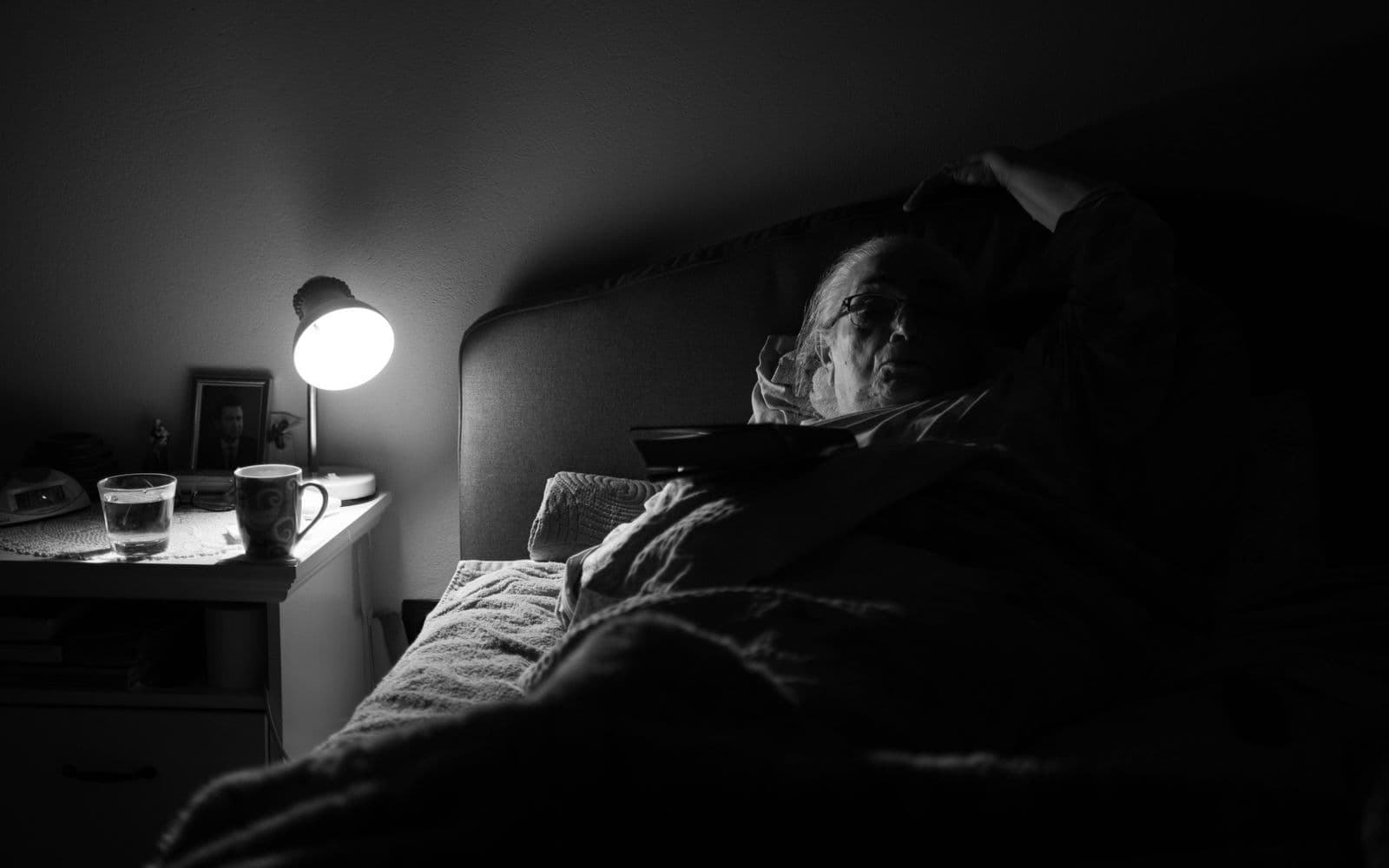
The reason it matters beyond the discomfort itself is sleep. Because symptoms peak in the evening and at night, RLS is fundamentally a sleep-wrecking condition — and chronic poor sleep cascades into fatigue, low mood, impaired concentration, and reduced quality of life [2]. RLS is also frequently accompanied by periodic limb movements during sleep: repetitive, involuntary leg jerks that further fragment rest [4].
How RLS is diagnosed
There is no blood test or scan that diagnoses RLS itself. It is a clinical diagnosis, made when a person's history meets five essential criteria established by the International Restless Legs Syndrome Study Group. A handy memory aid for the core features is URGE [2][5]:
Although RLS itself is diagnosed clinically, doctors typically order blood tests — especially iron studies (ferritin, transferrin saturation), and often kidney function and other labs — not to confirm RLS, but to find treatable underlying causes and rule out mimics [2][6]. Iron studies in particular are central, for reasons the next section makes clear. A sleep study is not usually needed to diagnose RLS, though it may be used if another sleep disorder is suspected [2].
The science: iron and dopamine
Understanding the biology of RLS is genuinely useful, because it explains why the treatments that work, work — and why one popular class of drugs fell out of favour. Two intertwined systems are central: brain iron and dopamine [7].
Brain iron deficiency
This is the pivotal insight, and it is counterintuitive. Studies using brain imaging and autopsy tissue have consistently found reduced iron in specific brain regions of people with RLS — even when the iron level in their blood is completely normal [7][8]. Iron can be low where it matters — in the brain — while looking fine on a routine blood count. This is why iron status is so important in RLS, and why the thresholds used are higher than for ordinary anaemia. Established
The dopamine connection
Iron is a necessary building block for the brain's dopamine system, which helps produce smooth, controlled movement. In RLS, the same regions that show low iron also show a disturbed dopamine state [8]. This dopamine link explains why drugs that boost dopamine were, for years, the front-line treatment — and, as we'll see, why long-term use of those same drugs can paradoxically make RLS worse over time [8]. Established that both systems are involved; the precise mechanism connecting them is still being worked out.
There is also a clear genetic component — RLS often runs in families, and specific gene variants (such as BTBD9 and MEIS1) are associated with it — which is why a family history is a meaningful clue [8].
Iron can be low where it matters — in the brain — while looking perfectly normal on a routine blood test. That single fact reshapes how RLS is treated.
Causes and what makes RLS worse
RLS comes in two broad forms. Primary RLS is idiopathic — no external cause — and often hereditary, frequently starting earlier in life. Secondary RLS arises from an identifiable condition and can sometimes be resolved by treating that condition [1]. The common drivers of secondary RLS are worth knowing because several are treatable.
Treatment: what changed in 2024
This is the section where outdated advice is most common, because the standard of care genuinely shifted. In late 2024 the American Academy of Sleep Medicine published an updated clinical practice guideline that significantly changed first-line treatment for RLS — so guidance written even a few years ago may now be out of date [13][14]. Here is the current shape of treatment.
Non-drug and complementary options
Many people, especially with milder RLS, get meaningful relief from non-drug measures — sometimes enough to avoid medication entirely. The evidence varies in strength, so here it is graded honestly.
A unifying caution: complementary approaches are best treated as additions to proper assessment, not replacements for it. The single highest-value step in RLS — checking iron the right way — is something only testing can guide.
Living well with RLS
Alongside medical treatment, day-to-day habits make a real difference, mostly by protecting sleep and avoiding triggers. Common, sensible measures include keeping a regular sleep schedule and good sleep environment; moderating or cutting caffeine, alcohol, and nicotine, which frequently worsen symptoms; building in light activity and stretching during long periods of sitting; and reviewing medications with a doctor to spot any that aggravate RLS [12]. Keeping a simple symptom-and-trigger diary can help you and your clinician spot patterns — which foods, medications, or activities precede bad nights.
It also helps to know the condition is chronic for many people but genuinely manageable. The combination of correcting underlying causes (especially iron), using the right medication when needed, avoiding aggravators, and protecting sleep allows most people to bring RLS under meaningful control [10].
When to see a doctor
RLS is rarely an emergency, but it is consistently under-diagnosed, so the main message is the opposite of alarm: if leg restlessness is disrupting your sleep or quality of life, it is worth a proper evaluation rather than years of quiet suffering.
When you go, it helps to come prepared: note when symptoms occur, what they feel like, what relieves them, your family history, and a full list of medications and supplements. Asking specifically for iron studies (ferritin and transferrin saturation) is reasonable, given how central iron is to both diagnosis and treatment [13].
Resources and support
The following are reputable starting points for reliable information and community. Organisations and links can change; verify details on each site, and bring anything you read to your own clinician.
Authoritative organizations & medical information
Restless Legs Syndrome Foundation — Patient organization · flagship. The leading non-profit dedicated to RLS. Offers patient education, a healthcare-provider directory, the latest treatment information, research updates, and a Get Support hub with local and virtual support groups. The first place most patients should look.
International Restless Legs Syndrome Study Group (IRLSSG) — Research & clinical standards. The scientific body behind the diagnostic criteria and severity scales used worldwide. A good source for the underlying clinical framework and the published treatment guidelines.
NINDS (U.S. National Institute of Neurological Disorders and Stroke) — Government health information. Clear, authoritative, plain-language overview of RLS causes, diagnosis, and treatment from the U.S. federal neuroscience agency, with current research directions.
Cleveland Clinic — Restless Legs Syndrome — Clinical reference. A reliable, regularly updated clinical overview covering symptoms, causes, diagnosis, and treatment options in accessible language.
American Academy of Sleep Medicine — 2024 RLS Guideline — Updated treatment guideline. The professional body whose 2024 clinical practice guideline reshaped RLS treatment (iron and alpha-2-delta ligands up; dopamine agonists down). Useful for understanding the current standard of care.
Sleep health context
Sleep Foundation — Restless Legs Syndrome — Sleep education. Approachable, well-referenced articles connecting RLS to broader sleep health, with practical self-management guidance.
Peer communities (use thoughtfully — see note below)
r/RestlessLegs (Reddit) — Online community. An active peer community where people share experiences, triggers, and what has and hasn't worked for them. Strong on lived experience and emotional support; not a source of medical advice.
RLS Foundation Support Groups & Facebook communities — Support groups. The RLS Foundation coordinates volunteer-led local and virtual support groups, and there are numerous Facebook groups (search "Restless Legs Syndrome") where patients connect. The Foundation-affiliated options are the most reliably moderated starting point.
References
Sources accessed June 11, 2026. This guide reflects the 2024 AASM clinical practice guideline; treatment standards evolve and individual cases vary and require professional evaluation.
- "Restless legs syndrome," AMBOSS (Willis-Ekbom disease; primary vs secondary; associations and aggravating drugs), 2026. [Online]. Available: amboss.com
- Cleveland Clinic, "Restless Legs Syndrome (RLS): Causes, Symptoms & Treatment." [Online]. Available: my.clevelandclinic.org
- "The global and regional prevalence of restless legs syndrome among adults: A systematic review and modelling analysis," PMC, NIH (global prevalence ~7.12% of adults). [Online]. Available: ncbi.nlm.nih.gov/pmc/PMC11156251
- "The Management of Restless Legs Syndrome: An Updated Algorithm," Mayo Clinic Proceedings, 2021 (clinically significant RLS prevalence 1.5–2.7%; periodic limb movements). [Online]. Available: mayoclinicproceedings.org
- "Restless Legs Syndrome," The Neurology Center (IRLSSG diagnostic criteria). [Online]. Available: neurologycenter.com
- "Treatment of restless legs syndrome and periodic limb movement disorder: an AASM clinical practice guideline" (iron assessment methodology), J Clin Sleep Med, 2025. [Online]. Available: irlssg.org
- "Iron, dopamine, genetics, and hormones in the pathophysiology of restless legs syndrome," PubMed (decreased brain iron; relative dopamine excess), 2017. [Online]. Available: pubmed.ncbi.nlm.nih.gov/28236139
- NINDS, "Restless Legs Syndrome" (low brain iron; basal ganglia/dopamine; genetics; aggravating medications). [Online]. Available: ninds.nih.gov
- "Current updates in Restless Legs Syndrome: A pragmatic review," Annals of Movement Disorders, 2024 (pregnancy and ESRD; non-pharmacological strategies; iron thresholds). [Online]. Available: journals.lww.com
- Pacific Neuroscience Institute, "Restless Legs Syndrome" (associated conditions; management overview), 2026. [Online]. Available: pacificneuroscienceinstitute.org
- "Restless Legs Syndrome: From Pathophysiology to Clinical Diagnosis and Management," Frontiers in Aging Neuroscience (aggravating drug classes). [Online]. Available: ncbi.nlm.nih.gov/pmc/PMC5454050
- "The Management of Restless Legs Syndrome: An Updated Algorithm" (RLS Foundation Scientific & Medical Advisory Board; lifestyle, triggers, complementary therapies). [Online]. Available: rls.org
- J. W. Winkelman et al., "Treatment of restless legs syndrome and periodic limb movement disorder: an American Academy of Sleep Medicine clinical practice guideline," J Clin Sleep Med, 2024. Summary: hcplive.com
- AASM, "New guideline provides treatment recommendations for RLS," 2024 (IV iron for ferritin <100 or TSAT <20%; alpha-2-delta ligands strongly recommended). [Online]. Available: aasm.org
- "AASM Guidelines Update: Restless Leg Syndrome," Neurology Advisor (strong recommendation for gabapentin enacarbil, gabapentin, pregabalin; iron methodology; agents without meaningful benefit), 2025. [Online]. Available: neurologyadvisor.com
- "AASM Updates Clinical Guidelines for Restless Legs Syndrome," HCPLive (augmentation 7–10% per year; dopamine agonists no longer recommended; impulse-control risk), 2026. [Online]. Available: hcplive.com
- "Restless Legs Syndrome and PLMD: AASM 2025 Guideline Summary," Medscape (bilateral high-frequency peroneal nerve stimulation, conditional recommendation). [Online]. Available: reference.medscape.com
- "Pneumatic Compression Devices for Treatment of Restless Legs Syndrome," CHEST (randomised, sham-controlled evidence of benefit). [Online]. Available: journal.chestnet.org


Comments